






Contents
- 1. Benefits of Exercises for Neck and Shoulder Pain
- 2. Compilation of 10 At-Home Exercises for Neck and Shoulder Pain
- 2.1. Side Neck Muscle Stretch
- 2.2. Neck and Shoulder Pain Relief Exercise: Cat Pose
- 2.3. Neck Rotation Exercise
- 2.4. Trapezius Muscle Stretch
- 2.5. Sphinx Pose Exercise for Neck and Shoulder Pain Relief
- 2.6. Shoulder Rotation and Shrug Exercise
- 2.7. Shoulder Muscle Stretch
- 2.8. Shoulder Rotation Exercise
- 2.9. Seated Forward Bend
- 2.10. Neck and Shoulder Release: Thread the Needle
- 3. Key Guidelines for Safe & Effective Practice
Neck and shoulder pain is a condition in which the muscles around the neck and shoulders become tense and stiff, leading to pain and restricted movement. This condition can significantly affect a person’s daily activities and overall quality of life.
To help relieve symptoms and improve mobility, many people choose to practice targeted neck and shoulder exercises. So, which exercises are effective in treating neck and shoulder pain? Let’s explore this topic together with ACC in the article below.
1. Benefits of Exercises for Neck and Shoulder Pain
Exercises for neck and shoulder pain provide numerous benefits, including:
- Improving blood circulation to the neck and shoulder area, helping reduce pain and promote tissue recovery.
- Enhancing joint flexibility and mobility, particularly in the neck, shoulders, and upper back.
- Alleviating pain, stiffness, and numbness in the neck and shoulders while restoring range of motion.
- Increasing overall joint flexibility and suppleness, supporting long-term musculoskeletal health.

2. Compilation of 10 At-Home Exercises for Neck and Shoulder Pain
People experiencing neck and shoulder pain can relieve discomfort by performing the following simple exercises at home.
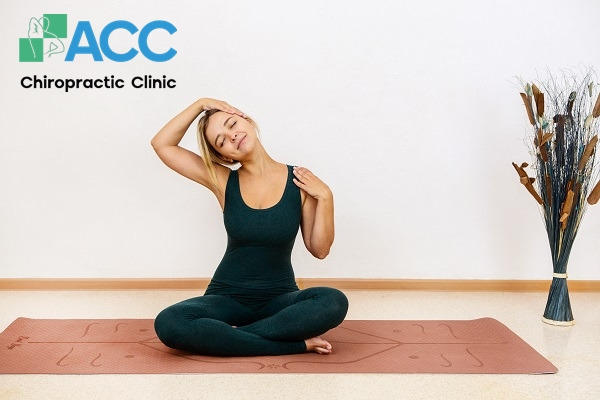
2.1. Side Neck Muscle Stretch
This exercise targets the muscles on both sides of the neck, helping to release tension and reduce pain.
- Step 1: Sit upright on a chair or on the floor with your back straight.
- Step 2: Place one hand gently on the top of your head and slowly tilt your head to the right, applying light pressure.
- Step 3: Keep your shoulders relaxed and avoid lifting them. Hold the stretch for 30-40 seconds while breathing normally.
- Step 4: Slowly return to the starting position, then repeat on the opposite side.
2.2. Neck and Shoulder Pain Relief Exercise: Cat Pose
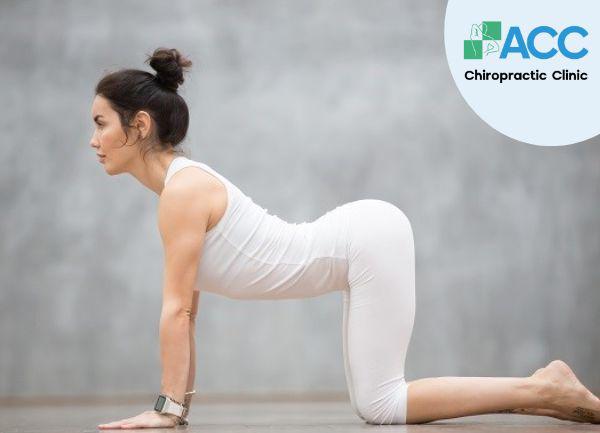
This exercise targets not only the neck and shoulders but also the mid and lower back, helping to relieve tension and improve overall spinal mobility.
- Step 1: Begin on all fours, placing your hands directly under your shoulders and your knees under your hips. Keep your spine in a neutral position.
- Step 2: Inhale deeply, then slowly exhale while tightening your abdominal muscles and drawing your navel toward your spine. Gently round your back upward and allow your head to relax downward, releasing tension in the neck.
- Step 3: Hold this position for 3-5 seconds while breathing comfortably.
- Step 4: Inhale as you slowly lift your head and chest, arching your back downward toward the floor and looking up toward the ceiling. Hold for another 3-5 seconds.
- Step 5: Repeat the sequence 5 times in a slow, controlled manner.
2.3. Neck Rotation Exercise
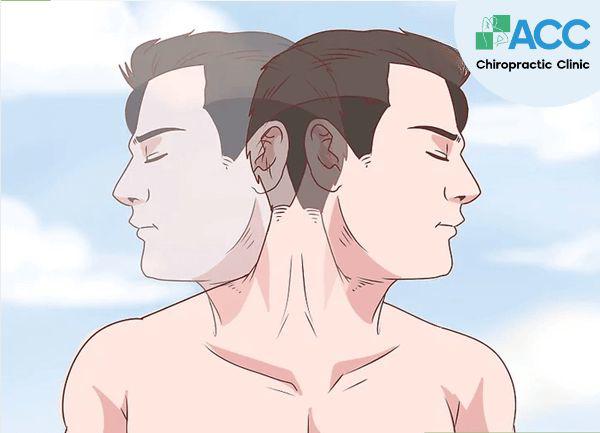
This exercise gently stretches the neck muscles, helping to reduce tension and relieve discomfort in the neck and shoulder area.
- Step 1: Sit upright with your back straight and your head facing forward. Keep your shoulders relaxed.
- Step 2: Slowly rotate your head to the left as far as is comfortable. Hold the position for about 5 seconds.
- Step 3: Return to the center, then slowly rotate your head to the right and hold for another 5 seconds.
2.4. Trapezius Muscle Stretch
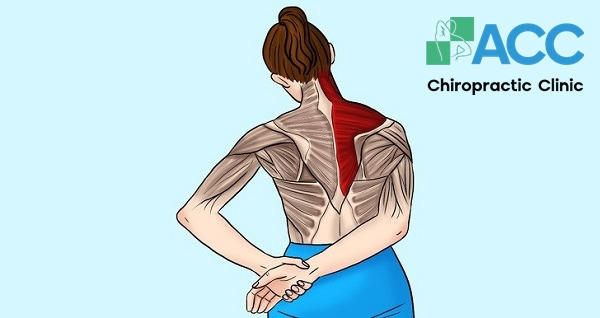
This stretch helps relax tight trapezius muscles in the neck and shoulders, reducing tension and improving neck and shoulder discomfort.
- Step 1: Sit or stand upright with your back straight. Move your right arm behind your back.
- Step 2: Use your left hand to grasp your right hand or wrist and gently pull it toward your left side or left thigh.
- Step 3: Slowly tilt your head to the left, keeping your shoulders relaxed. Hold this stretch for 10-15 seconds while breathing normally.
- Step 4: Return to the starting position and repeat the movement on the opposite side.
Perform the stretch on each side 2-3 times for best results.
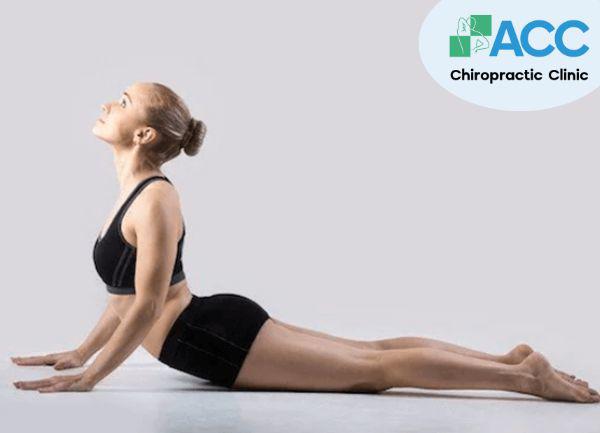
2.5. Sphinx Pose Exercise for Neck and Shoulder Pain Relief
The Sphinx Pose helps strengthen the muscles of the arms, shoulders, and spine, while also improving flexibility and relieving tension in the neck and shoulder area.
- Step 1: Lie face down on the floor with your legs extended straight behind you and close together.
- Step 2: Place your forearms on the floor, elbows positioned directly under your shoulders.
- Step 3: Press your forearms into the floor to gently lift your upper body. Open your chest and lengthen your spine while keeping your abdomen and hips in contact with the floor.
- Step 4: Keep your neck relaxed and gaze forward or slightly downward. Hold the position for about 15 seconds, breathing steadily.
- Step 5: Slowly lower your upper body back to the starting position.
Repeat the exercise 5 times, or as tolerated, to achieve the best results.
2.6. Shoulder Rotation and Shrug Exercise
This exercise helps release tension in the neck and shoulder muscles, providing quick relief from stiffness and pain.
- Step 1: Slowly shrug your shoulders up toward your ears, then relax them back down. Continue this movement for about 30 seconds, then rest briefly.
- Step 2: Roll your shoulders forward and upward toward your ears, then rotate them downward and backward while gently squeezing your shoulder blades together.
- Step 3: Continue the shoulder rolls for 30 seconds, then switch directions and repeat.
2.7. Shoulder Muscle Stretch
This stretching exercise helps loosen tight shoulder and neck muscles, improving flexibility and reducing discomfort.
- Step 1: Sit upright in a sturdy chair. Reach one hand behind you and grasp the back of the chair to stabilize your shoulder.
- Step 2: Gently lower your chin toward your chest, then tilt your head toward your left shoulder.
- Step 3: Slowly rotate your head about 45 degrees to the right, hold the stretch for 20-30 seconds while breathing normally, then return to center.
- Step 4: Repeat the movement by rotating your head 45 degrees to the left.
- Step 5: Switch sides and repeat the exercise on the opposite shoulder.

>> More information: Proper sleeping position – Relieve the pain
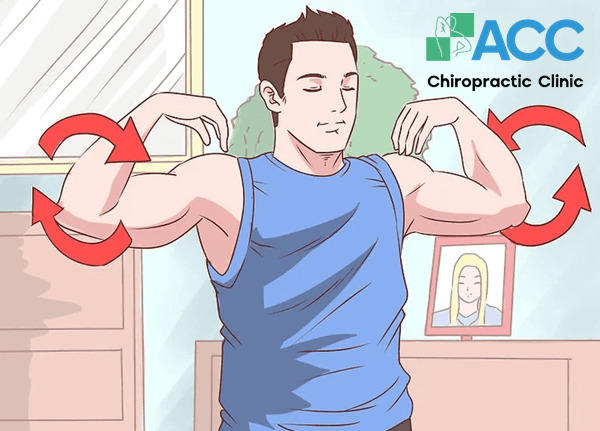
2.8. Shoulder Rotation Exercise
This exercise helps relax the muscles around the shoulders, improving mobility and quickly reducing stiffness and pain.
- Step 1: Sit or stand upright with your back and neck straight. Keep your shoulders relaxed.
- Step 2: Raise your arms to shoulder height and place your hands lightly on your shoulders.
- Step 3: Slowly rotate your elbows in a circular motion, moving them forward, upward, backward, and down in a smooth, controlled manner.
- Step 4: Continue rotating for about 30 seconds, then change direction and repeat.
Perform the movement gently and avoid any sudden or jerky motions.
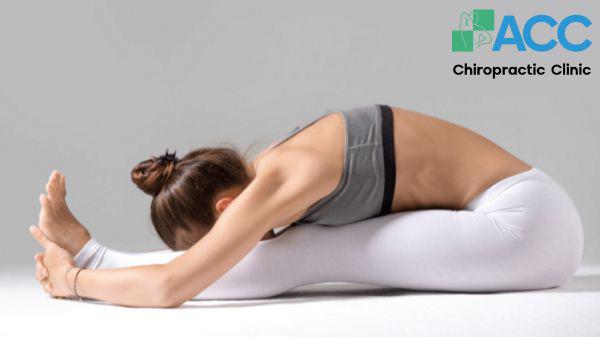
2.9. Seated Forward Bend
The seated forward bend helps stretch the spine, neck, and shoulder muscles, reducing tension and improving flexibility.
- Step 1: Sit on the floor with your spine straight and your legs extended forward. Flex your feet so your toes point upward.
- Step 2: Inhale deeply as you raise your arms overhead, keeping your elbows straight. Lengthen your spine and look upward, following your hands with your eyes.
- Step 3: Exhale slowly and hinge forward from your hips, lowering your arms and reaching toward your feet. Move only as far as is comfortable.
- Step 4: If you can reach your toes, gently hold them and maintain the stretch until you feel a mild stretch in your lower back and hamstrings. Avoid forcing your head toward your knees.
- Step 5: Inhale as you slowly lift your torso back up, releasing your hands and returning to the starting position.
Hold the stretch for 20-30 seconds and repeat 2-3 times while breathing calmly.
2.10. Neck and Shoulder Release: Thread the Needle
This exercise releases deep muscle tension between the shoulder blades and the neck, creating a sense of relaxation and mobility.
- Step 1: Start on your hands and knees in a “Tabletop” position. Ensure your wrists are under your shoulders and knees are under your hips.
- Step 2: On an exhale, slide your right arm underneath your left arm, with your palm facing up.
- Step 3: Lower your right shoulder and right ear gently onto the floor. Your hips should remain high and centered.
- Step 4: Inhale and reach your left arm up toward the ceiling to open your chest (optional), or simply keep your left hand on the floor for support.
- Step 5: Breathe deeply and hold this position for 3-6 breaths, allowing tension to melt away from the shoulders.
- Step 6: To release, press your left hand into the floor to lift yourself back up to Tabletop pose. Repeat the sequence on the opposite side.
Here is the optimized content. I have refined the language to be more professional and authoritative, suitable for patient education materials at a medical facility.

Working from home during the coronavirus outbreak definitely offers comfort, but with lack of proper office furniture, it can be tricky to maintain the right posture while working at home. Many of us sit for long periods of time and may suffer from back pain or neck pain. AmCham virtual…
3. Key Guidelines for Safe & Effective Practice
When performing exercises for neck and shoulder pain, patients should adhere to the following principles to ensure safety and maximize recovery:
3.1. Consult a Specialist First
To ensure exercises are safe and effective, it is crucial to obtain a diagnosis and a tailored plan from a specialist before starting. At ACC Clinic, we prioritize a thorough examination for every patient. This allows our doctors to design a personalized neck and shoulder exercise regimen with specific durations and frequencies matched to your individual condition and recovery goals.
3.2. Manage Pain Levels Prior to Exercise
Exercises are most effective when acute pain is under control. Patients should ensure their pain is stable before attempting new movements; when pain is managed, neck mobility improves, allowing for smoother rotations without discomfort. We recommend consulting your doctor for appropriate pain management strategies to create a safe foundation for your exercise routine.
3.3. Practice Consistency, But Listen to Your Body Consistency is key to reducing neck and shoulder pain.
Patients should aim to practice their prescribed exercises daily without long interruptions. However, safety is paramount: if pain worsens during or after exercise, stop immediately. Do not try to push through the pain. Instead, consult your doctor to adjust the treatment plan or switch to a more suitable movement.

3.4. Support Recovery with a Bone-Healthy Diet
Alongside exercise, nutrition plays a vital role in recovery. Patients should maintain a diet rich in essential vitamins and minerals to support the musculoskeletal system:
- Protein: Prioritize sources such as meat, fish, eggs, and dairy to maintain muscle mass and support tissue repair.
- Calcium & Vitamin D: Essential for bone density and structural integrity. Incorporate foods like fatty fish, liver, and fortified dairy products.
- Anti-inflammatory Foods: A balanced diet can also help reduce systemic inflammation, indirectly aiding in pain management and faster recovery.
3.5. Integrate Professional Treatment for Lasting Relief
While home exercises are excellent for maintenance and mild cases, they may not be sufficient for severe or chronic pain caused by underlying conditions (such as disc herniation or degeneration). In these cases, targeted medical intervention is necessary.
- ACC’s Approach: At ACC, we treat the root cause of the pain rather than just the symptoms. We successfully combine Chiropractic Therapy with Physical Therapy and Rehabilitation to treat severe neck and shoulder pain.
- Non-Invasive: Our regimen is highly effective without the need for medication or surgery.
- Expert Care: Patients are treated by highly qualified doctors specializing in Chiropractic techniques.
- Personalized Rehabilitation: We design comprehensive recovery programs specific to each patient’s condition, ensuring not only rapid pain relief but also the restoration of full range of motion and long-term joint health.
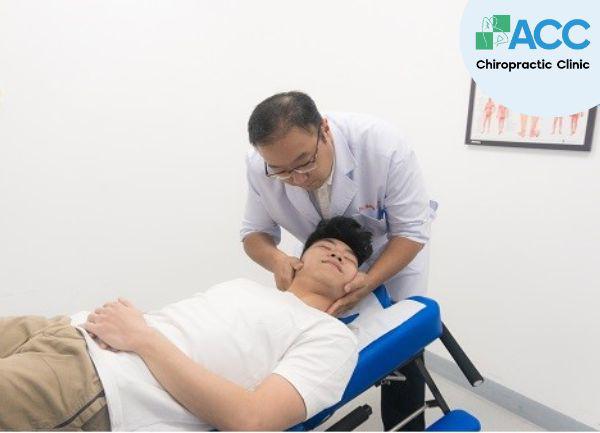
Accelerating Recovery with Advanced Technology. To further enhance treatment efficacy and shorten recovery time, ACC doctors utilize state-of-the-art therapeutic equipment. This includes Shockwave Therapy and High-Intensity Laser Therapy (Generation IV) . These advanced modalities penetrate deep into tissue to stimulate healing, allowing patients to experience significant, stable improvements in neck and shoulder function rapidly.
Conclusion: The Path to Complete Relief
The exercises outlined above are excellent tools for managing mild symptoms and maintaining mobility at home. However, to treat neck and shoulder pain at its root cause and prevent recurrence, professional intervention is essential.
True recovery requires a diagnosis from a reputable facility and a personalized treatment plan tailored to the specific severity of your condition. By combining self-care with ACC’s comprehensive chiropractic and physical therapy protocols, you can ensure your pain is treated correctly and effectively.
Have questions about your neck and shoulder pain? Please contact ACC HERE for immediate consultation and expert advice.
>> Read more: