








Contents
- 1. What is Upper Back Pain? Classifying Upper Back Discomfort
- 2. How Does Upper Back Pain Manifest?
- 3. What Are the Causes of Upper Back Pain?
- 4. Is Upper Back Pain Dangerous?
- 5. When Should You See a Doctor?
- 6. Diagnostic Methods for Upper Back Pain
- 7. Care and Treatment for Upper Back Pain
- 8. Preventive Measures to Reduce Upper Back Pain
- 9. Frequently Asked Questions (FAQs)
Many people tend to overlook upper back pain, assuming it is merely common muscle fatigue. However, in many cases, discomfort in the upper back can be linked to poor posture, spinal conditions, or other underlying health issues. Identifying the correct cause, obtaining a timely diagnosis, and receiving proper treatment are crucial factors in preventing further complications.
1. What is Upper Back Pain? Classifying Upper Back Discomfort
Upper back pain refers to any pain or discomfort occurring anywhere from the base of the neck to the bottom of the rib cage, most commonly localized in the T1 – T12 vertebrae (thoracic spine).
Based on the duration of the pain, this condition is classified into three categories:
- Acute Upper Back Pain: Muscle pain in the upper back that lasts for less than 6 weeks.
- Subacute Upper Back Pain: A pain condition that persists for 6 to 12 weeks.
- Chronic Upper Back Pain: Persistent pain lasting for more than 12 weeks, which severely impacts the patient’s mobility and quality of life.
2. How Does Upper Back Pain Manifest?
Upper back pain often presents as a sharp, stabbing, or burning sensation that radiates toward the neck, shoulders, and nape. The pain may travel along the spinal nerves, spreading from the chest area to the arms, abdomen, and other parts of the body, accompanied by numbness, tingling, and muscle weakness.
Specific manifestations include:
- Sharp, Localized Pain: Patients experience a stabbing or burning sensation originating in the upper back.
- Radiating Upper Back Pain: The pain may follow nerve pathways to surrounding areas such as the neck, shoulders, chest, arms, or stomach. Patients may also experience a “shock-like” sensation (paresthesia) due to nerve root compression.
- Stiffness and Restricted Mobility: Difficulty performing movements such as bending, leaning back, tilting, or rotating the torso, as well as lifting or lowering the arms. As the pain intensifies, the paraspinal muscles tend to become rigid and tense to the touch, while ligaments and joints lose their flexibility.
- Tingling and Numbness: A “pins and needles” or burning sensation often accompanies the pain when nerve roots are compressed. This sensation can spread to the front of the chest, the abdomen, or down the arms.

3. What Are the Causes of Upper Back Pain?
Upper back muscle pain can stem from underlying medical conditions such as herniated discs or spinal degeneration; poor habits like incorrect posture or a sedentary lifestyle; or physical injuries.
3.1. Underlying Medical Conditions
Certain conditions can cause sudden onset upper back pain, including herniated discs, spinal degeneration, scoliosis, and arthritis. Specifically:
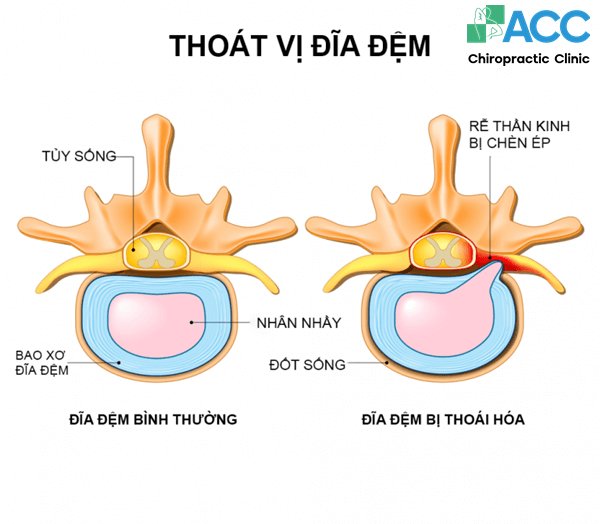
- Herniated Disc: In most cases, disc herniation primarily occurs in the lower back. However, in some instances, discs in the upper back region can still slip out of their original position, causing upper spinal pain. This is mainly caused by excessive pressure on the spine, which tears the outer ring (annulus fibrosus) of the disc, allowing the soft center (nucleus pulposus) to leak out. Additionally, a herniated disc is often a consequence of spinal degeneration.
- Spinal Degeneration: According to many experts, the most common cause of upper back pain in the elderly is spinal degeneration. This is a natural aging process where the protective cartilage between the vertebrae wears down over time. When this protective layer is lost, the bones rub against each other, leading to pain. In severe cases, bone spurs (osteophytes) may develop and compress surrounding nerves, causing sudden onset upper back pain.
- Scoliosis (Spinal Curvature): If spinal deformities are not intercepted and corrected early, they can cause painful muscle spasms and place excessive pressure on discs and joints. Furthermore, this condition carries a high risk of leaving permanent physical deformities, affecting the patient’s aesthetic appearance.

- Arthritis: Certain inflammatory conditions, such as osteoarthritis or rheumatoid arthritis, can cause joint stiffness and aching in the thoracic spine. Symptoms are most pronounced in the morning (usually for about 30 minutes after waking up), gradually subsiding during the day before returning in the evening to disrupt sleep. Occasionally, patients may experience “pins and needles,” tingling, or numbness in the nerves or spinal cord.
3.2. Poor Lifestyle Habits
Harmful habits such as a sedentary lifestyle, incorrect posture, or overexerting the upper back muscles can also lead to upper back fatigue and pain.
- Sedentary Lifestyle: Few realize that sitting for prolonged periods and a lack of physical activity are among the most common factors causing upper back pain. Without regular exercise, the back muscles become weak and highly susceptible to injury.
- Incorrect Posture: Furthermore, habits such as slouching over a desk or sliding down in a chair or on the floor while working cause gravity and body weight to place excessive pressure on the vertebrae, discs, and surrounding ligaments. If these habits persist, you will not only experience sudden upper back aches and discomfort but also face a range of complex complications.

- Overuse of Upper Back Muscles: While regular exercise strengthens the upper back, overexerting these muscles can lead to irritation, tension, and spasms, resulting in persistent upper back pain.
A classic example of muscle overuse is seen in handball or baseball players. Performing throwing motions tens of thousands of times over a long period places a significant burden on the shoulders and upper back. Without timely treatment, this condition is at high risk of evolving into chronic pain.
3.3. Physical Injuries
It is entirely normal to experience soreness and aching in the upper back following a significant impact. In these instances, the pain is often a direct consequence of incidents such as vehicular accidents, falls, or sports-related injuries.
Regardless of the frequency or intensity of the pain whether mild or severe doctors strongly recommend an immediate medical check-up following any trauma. Certain internal injuries, such as vertebral fractures, carry a high risk of dangerous complications (including chronic pain, permanent nerve damage, or even paralysis) if not addressed with timely medical intervention.

3.4. Other Factors
Beyond common musculoskeletal causes, upper back spinal pain can sometimes be related to systemic diseases or more serious health conditions:
- Fibromyalgia: A condition characterized by widespread chronic pain, often accompanied by muscle stiffness, prolonged fatigue, and sleep disturbances. The upper back is a frequently affected area.
- Lung Cancer: In some cases, upper back pain can be an indirect symptom of lung cancer. This occurs when a tumor compresses nerves or spreads to nearby structures. The pain is typically persistent, dull, and does not improve with rest.
4. Is Upper Back Pain Dangerous?
Most cases of upper back pain that do not stem from serious underlying causes are not life-threatening. However, without a proper diagnosis and appropriate treatment, many cases can lead to severe complications, such as:
- Spinal cord compression: Causing weakness or paralysis in the limbs and loss of sensation.
- Incontinence: Loss of bowel or bladder control.
- Reduced Quality of Life: Persistent pain that intensifies over time restricts mobility and can eventually lead to muscle atrophy due to prolonged inactivity.
5. When Should You See a Doctor?
You should seek medical attention immediately if your upper back pain is accompanied by weakness in the arms or legs, difficulty moving, or tingling and numbness anywhere in the torso or lower body. Specific “red flag” symptoms include:
- Weakness in the arms or legs, making daily activities difficult.
- Tingling or numbness in the chest, abdomen, buttocks, or limbs.
- Loss of bowel or bladder control.
- Difficulty breathing (Shortness of breath).
- Fever or chills.
- Severe, excruciating headaches.
Đây là bản dịch chuyên nghiệp cho Mục 6 và 7, sử dụng các thuật ngữ y khoa chuẩn xác về quy trình chẩn đoán và điều trị:
6. Diagnostic Methods for Upper Back Pain
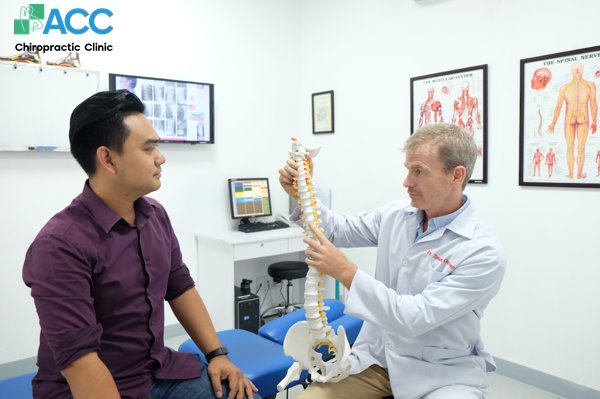
To determine the underlying cause of upper back pain or identify specific conditions, doctors will first review the patient’s medical history, current symptoms, and lifestyle habits. This is followed by a physical examination process, which includes: observing back posture, palpating the spine, and clinical testing.
Based on the information gathered, the doctor may order additional diagnostic imaging or tests:
- X-rays: Used to assess the extent of damage and identify bone-related issues such as arthritis, spinal degeneration, or fractures.
- MRI (Magnetic Resonance Imaging): The most modern and precise diagnostic method. It produces cross-sectional images of soft tissues and bones, allowing for an in-depth evaluation of spinal discs, nerves, the spinal cord, and surrounding organs.
- Bone Density Test (DEXA Scan): Uses X-rays to measure bone mineral density to check for osteoporosis in the thoracic spine – a major cause of upper back pain.
7. Care and Treatment for Upper Back Pain
Care and treatment strategies for upper back muscle pain range from lifestyle adjustments to professional medical interventions. These include proper rest, heat or cold therapy, therapeutic massage, and prescribed pain medication.
For more effective and long-term results, advanced treatments include Chiropractic care, Physical Therapy and Rehabilitation, and in severe cases where conservative treatments fail, surgery may be considered.
7.1. At-Home Care and Self-Management
If your upper back pain stems from poor posture, you can proactively manage the condition at home by correcting your sitting habits. Additionally, improving your nutrition and engaging in physical exercise will help strengthen the upper back muscles and enhance overall spinal health.
Check out these simple exercises to relieve upper back pain – just 5 minutes a day with ACC:
In addition, to help alleviate upper back pain, you can apply the following measures:
- Rest: If your upper back pain worsens with continuous movement or activities such as housework or exercise, it is best to rest for one to two days. However, avoid prolonged bed rest, as it can weaken the back muscles and potentially lead to increased pain.
- Heat/Cold Therapy: Applying heat or cold helps stimulate blood circulation and manage pain or swelling in the back area. Typically, patients should start with heat therapy followed by cold therapy. Note: Only apply for 20 minutes at a time and check your skin frequently to prevent tissue damage.
- Massage: Therapeutic massage helps relax stiff muscles and promotes increased blood flow to the affected area, aiding in recovery.

7.2. Professional Medical Treatments
Depending on the cause and severity of the upper back pain, doctors may prescribe various treatment methods, including pain medication, physical therapy, Chiropractic adjustments to correct spinal misalignments, or surgery in severe cases.
7.2.1. Medication To alleviate pain and reduce inflammation, doctors may prescribe:
- Non-steroidal anti-inflammatory drugs (NSAIDs)
- Acetaminophen
- Opioids (for severe cases under strict supervision)
However, drug therapy only offers temporary pain relief and does not address the root cause of the condition. Consequently, the pain is likely to recur once the medication wears off.

7.2.2. Surgery
Generally, surgery is rarely required for patients with upper back pain. Most individuals begin to see improvement within 4 to 6 weeks through a combination of proper rest and physical therapy.
Surgery is only considered if the patient exhibits signs of severe damage, such as:
- Chronic pain that cannot be managed through non-surgical (internal) treatments.
- Spinal deformities that show signs of significant progression.
- The health of the spinal cord or nerve roots is at risk of being compromised.
7.2.3. Chiropractic Care
When upper back discomfort is linked to structural misalignments of the musculoskeletal system or spine, patients cannot treat the condition effectively at home. In such cases, a more specialized solution is required, such as Chiropractic care.
The mechanism of this method involves using manual techniques with precise force to return misaligned structures to their original positions. This process relieves pressure on compressed nerves and stimulates the body’s natural healing response. As a result, upper back pain gradually disappears without the need for medication or invasive surgery.
7.2.4. Physical Therapy
Physical therapy methods—such as spinal traction, acupuncture, upper back massage, or electrical stimulation (electrotherapy)—help reduce nerve compression and strengthen muscles, significantly alleviating pain. However, physical therapy should only be performed at reputable clinics equipped with modern rehabilitation machinery and under the guidance of qualified professionals to avoid unnecessary injuries and ensure a fast recovery.

Expert Advice: If left untreated or managed incorrectly, persistent upper back pain can lead to complications affecting the entire spine. Therefore, when pain interferes with your daily activities, you should seek early medical consultation at a reputable healthcare facility for timely diagnosis and intervention. Receiving the right treatment at the right time and strictly following a prescribed regimen are crucial for recovery.
When treated at a specialized facility, patients can rest assured due to several key benefits:
- Consultation with Experienced Specialists: Direct examination by a team of experts in musculoskeletal and spinal health. Doctors provide a comprehensive evaluation to identify the root cause, prioritizing conservative, non-invasive treatments to minimize the risks associated with medication and surgery.
- Evidence-Based and Personalized Regimens: Treatment plans are developed based on medical evidence and tailored to each patient’s specific condition, optimizing effectiveness while limiting unnecessary risks.
- Multimodal Integration: A combination of Chiropractic adjustments, Physical Therapy, Rehabilitation, and specialized therapeutic exercises. This holistic approach relieves pain, restores functional mobility, and helps patients return to daily life while preventing long-term complications.
- Modern Facilities and Professional Support: Access to state-of-the-art therapeutic systems and a professional rehabilitation team who guide patients through correct exercise techniques for a fast and safe recovery.
- Continuous Monitoring: Doctors closely monitor the recovery process and promptly adjust the treatment plan to achieve optimal results.

8. Preventive Measures to Reduce Upper Back Pain
To minimize upper back discomfort, you should implement measures such as regular exercise, maintaining proper posture during daily activities, exercising caution when lifting heavy objects, building a healthy diet, and balancing work-rest schedules while limiting prolonged stress.
- Regular Exercise: Engaging in low-impact activities like walking, yoga, swimming, or stretching helps strengthen back muscles, improve flexibility, and reduce the risk of recurring pain.
- Maintain Proper Posture: Sitting, standing, and working with correct alignment reduces pressure on the thoracic spine. This is especially vital for individuals who sit for long periods or work extensively at computers.
- Caution When Lifting Heavy Objects: Always keep your back straight, use the strength of your legs to lift, and avoid sudden twisting motions to prevent muscle and spinal injury.
- Stress Management: Prolonged stress often triggers muscle tension in the back, neck, and shoulders. Prioritize relaxation, ensure adequate sleep, and maintain a healthy work-life balance.
- Maintain a Healthy Diet: Ensure sufficient intake of calcium, vitamin D, protein, and essential nutrients to promote bone and joint health, helping to prevent back pain.
- Balance Daily Activities: Avoid overexertion and limit staying in one position (sitting or standing) for too long to reduce continuous pressure on the upper back region.

In general, upper back pain is usually not a critical issue and can often be resolved by improving daily habits and workspace ergonomics. However, if the pain is linked to musculoskeletal or spinal conditions, a more effective medical solution is required, specifically Chiropractic Care at ACC Clinic.
Contact your nearest ACC Clinic today to receive dedicated care from our professional staff and get an accurate diagnosis from our team of international doctors to address the root cause of your pain.
9. Frequently Asked Questions (FAQs)
Here are some common concerns regarding upper back muscle pain and discomfort:
9.1. What causes sudden upper back pain upon waking up?
Waking up with upper back pain usually stems from common issues such as poor sleeping posture, using an unsupportive mattress or pillow, or overexerting yourself the previous day, leading to muscle strain. However, if the pain persists or recurs frequently, it may be an early sign of underlying spinal conditions. You should seek a medical consultation at a reputable facility for an accurate diagnosis.
9.2. How can I distinguish between muscle pain and internal organ damage?
- Muscular Back Pain: Typically manifests as aching, stiffness, or localized swelling and bruising. The pain is often sharp and intensifies with movement or when pressure is applied directly to the area.
Organ-Related Back Pain: Often occurs on one side of the back and tends to be a dull, deep ache. It is frequently accompanied by systemic symptoms (such as fever, nausea, or changes in urinary habits) and does not usually change in intensity when you move or change positions.
>> Reed more: