







Contents
Middle back pain is a common symptom that can affect anyone. However, not everyone understands what this condition signals or how to treat the pain safely and effectively.
The middle back starts below the neck and extends to the end of the rib cage. The anatomy of this region includes:
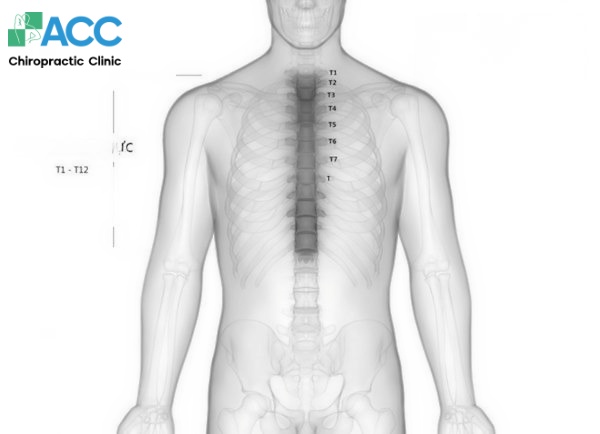
- The thoracic spine: Consisting of 12 vertebrae from T1 to T12. These vertebrae are connected to the ribs to form the rib cage, which protects the internal organs.
- The spinal cord: Responsible for transmitting signals from the brain to the rest of the body.
- Supporting structures: Various muscle groups, ligaments, and intervertebral discs.
Any injury to the components above can cause middle back pain. Depending on the location and severity of the injury, patients may experience various symptoms, such as:
- Muscle pain and stiffness.
- Pain intensity ranging from dull and aching to sharp, burning, or intense.
- Numbness or tingling in the chest or limbs.
- Chest tightness.
- Weakness in the arms and legs.
- Loss of bowel or bladder control (in severe cases).
Treating middle back pain from the onset is essential to minimize the risk of dangerous complications and help patients regain their quality of life. Depending on the underlying cause, doctors may recommend one or more tailored treatment methods for each individual.
1. 7 Common Causes of Middle Back Pain
Middle back pain can stem from various minor factors in daily life. Among them, the following seven issues are the most common:
1.1. Poor Posture (Sitting, Lying Down, or Walking)
One of the primary causes of pain in the middle back is excessive pressure on the thoracic vertebrae. In many cases, incorrect posture is the key factor behind this issue. Furthermore, maintaining improper posture forces muscle groups and ligaments to work harder to maintain body balance. If this condition persists, it can lead to pain or even soft tissue injury, resulting in persistent discomfort in the area.
1.2. Muscle Strain or Ligament Sprain
In addition to poor posture, frequently lifting heavy objects is highly likely to cause muscle strain and ligament sprains in the middle back. In severe cases, overstretching can lead to small tears in the ligaments. Sometimes, back ligaments can also be overstretched by sudden movements or incorrect exercise techniques, such as over-twisting the torso.
1.3. Physical Injury
Due to their rigid and stable structure, the T1-T12 vertebrae are less prone to injury compared to the cervical (neck) or lumbar (lower back) spine. Nevertheless, the risk of spinal injury remains, especially among the elderly.
In most cases, middle back injuries result from:
- Falling down stairs.
- Motor vehicle accidents.
- Sports-related injuries.
- Blunt force trauma.
1.4. Herniated Disc
Intervertebral discs are located between the vertebrae, acting as shock absorbers and supporting the flexibility of the spine.
Under certain conditions, a disc may bulge or its inner nucleus may leak out a condition known as a herniated disc. When this occurs, surrounding nerves are at risk of being compressed by the pressure from the herniated disc, leading to symptoms of pain, numbness, and tingling that can radiate from the middle back to the limbs.
1.5. Spinal Degeneration
Osteoarthritis or spinal degeneration is an inevitable consequence of the aging process. It is the underlying cause of various health issues that can result in middle back pain, such as herniated discs or spinal spurs (osteophytes).
While most cases of thoracic spinal degeneration occur in the elderly, there has been a significant increase in the risk of spinal osteoarthritis among young adults in recent years.
1.6. Compression Fractures
Physical trauma to the middle back can lead to cracks or even closed fractures in the vertebrae. Additionally, a decrease in bone density often associated with arthritis or osteoporosis significantly increases the risk of this condition. Individuals with compression fractures in the thoracic spine will experience sharp, indescribable pain when moving the middle back. If the spinal cord is also affected, sensations of tingling, numbness, and weakness may occur concurrently.
1.7. Scoliosis (Spinal Curvature)
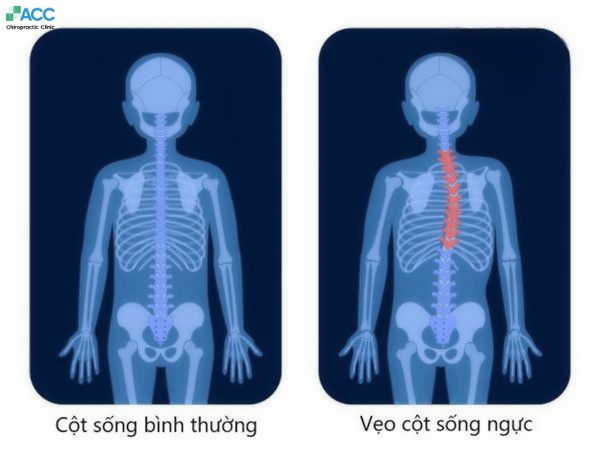
When the spine loses its natural physiological curvature, it results in scoliosis. This misalignment leads to an uneven distribution of weight across the back, creating pressure points that cause pain. The middle back is one of the areas most susceptible to these effects.
2. What are the Safe and Effective Treatments for Middle Back Pain?
Depending on the underlying cause and the progression of the condition, patients have several treatment options to choose from:
2.1. Correcting Posture in Daily Activities
Discomfort and persistent back pain are closely linked to poor posture. Therefore, the first factor to consider when experiencing middle back pain is your body alignment. To improve this, you should practice the following habits:
- Stand straight with your chest out and shoulders back (avoid slouching).
- Sit or lie down with a straight back.
- Take frequent breaks if you must sit for long periods for work or study.
In reality, posture correction is primarily effective for mild pain. If the internal musculoskeletal structure has already been damaged, patients will need to combine these habit changes with more appropriate clinical treatments.
2.2. Using Pain Medication
Currently, many people still hold the belief that “if it hurts, take medicine.” However, few realize that painkillers only provide temporary relief for a short duration. Once the medication wears off, the pain is likely to return potentially with greater intensity. Furthermore, improper use of painkillers can damage internal organs, leading to issues such as impaired liver function or gastric ulcers. Patients should strictly avoid self-medicating with products of unknown origin to prevent “spending money only to worsen the condition.”
2.3. Surgery for Middle Back Pain
According to research, surgery can be a highly successful option for eliminating the root cause of middle back pain in many cases. However, this invasive treatment is typically only recommended as a last resort in specific situations, including:
- Patients exhibiting loss of bowel or bladder control.
- Previous pain management protocols have failed to deliver the expected results.
The reason for this caution is that, like any invasive procedure, surgery carries numerous unpredictable risks and complications. Furthermore, there remains a high risk of recurring middle back pain, even after a successful operation.
3. Is There a Drug-Free and Non-Surgical Treatment for Middle Back Pain?
The only way to permanently eliminate middle back pain is to accurately identify the root cause and treat it directly. In most cases, the underlying factor behind the discomfort is the misalignment or damage within the internal musculoskeletal structure of the back.
Recently, Chiropractic care has gained significant trust as one of the most optimal solutions for addressing these issues.
By applying precise manual adjustments, specialists can realign the vertebrae to their natural positions, thereby relieving nerve pressure and restoring the body’s self-healing capabilities without the need for medication or surgery.
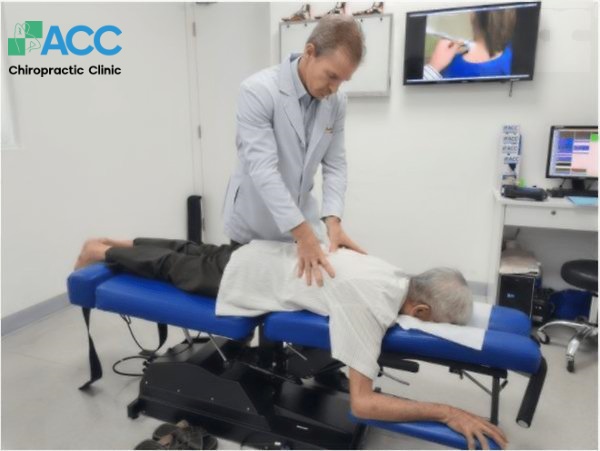
Compared to surgery, this non-invasive therapy offers equivalent effectiveness with a much higher safety profile. Using precise manual force, Chiropractic specialists realign misaligned spinal structures or discs to their natural positions. This process effectively releases the pressure exerted on the surrounding nerve roots.
Furthermore, these adjustments activate the body’s natural healing mechanisms for bones, joints, and surrounding soft tissues. As a result, middle back pain can resolve naturally without the need for medication or surgical intervention.
4. Where is the Best Place for Chiropractic Treatment for Middle Back Pain?
According to many musculoskeletal specialists and patient feedback, ACC Clinic is considered a leading specialized unit for Chiropractic care in Vietnam today.
Two outstanding advantages that have built ACC’s reputation among patients include:
- A 100% foreign-trained team of Chiropractic specialists: Our highly experienced doctors come from countries with advanced medical backgrounds, such as the USA, Canada, and New Zealand.
- Modern and advanced facilities: State-of-the-art equipment helps patients shorten their treatment time and quickly regain their quality of life. Some of the cutting-edge devices used at ACC include:
Furthermore, the dedication, attentiveness, and professionalism of the doctors and specialists at ACC are demonstrated through a comprehensive assessment process. Before recommending a treatment plan and rehabilitation program, our experts carefully examine the root cause of the back pain, its severity, and the patient’s current physical condition. This ensures that the treatment’s effectiveness is not only optimized but also sustained in the long term.
Therefore, if you are struggling with persistent and uncomfortable middle back pain, let ACC Clinic help you resolve the root of the problem through our safe, effective, and most suitable approach.
>> Related posts: