








Contents
What medication to take for knee pain is a common question among many patients. However, it is important to note that knee pain stems from various causes. Beyond injuries, knee pain can be a symptom of several medical conditions, such as degeneration, arthritis, or gout. Therefore, medication sometimes only provides temporary relief; after that, the pain may return and potentially become even more severe

1. What Medication to Take for Knee Pain? 6 Commonly Used Medications
There are various types of medications used to treat knee pain, including:
1.1. Paracetamol for Knee Pain Relief
Paracetamol (also known as Acetaminophen) has analgesic (pain-relieving) and antipyretic (fever-reducing) effects and is often used as an alternative to Aspirin. However, it is important to note that Paracetamol only relieves pain and does not treat inflammation like other medications.
Dosage:
- For Adults: 500 – 1000 mg per dose, taken every 4 – 6 hours.
- For Children: 10 – 15 mg/kg per dose, taken every 4 – 6 hours, with a maximum of 5 doses in 24 hours.
Side Effects:
- Paracetamol is generally safe when used at the recommended dosage.
- Abuse or overdose can cause toxicity to the liver and kidneys, with symptoms such as dark urine, clay-colored stools, jaundice (yellowing of the skin or eyes), and in severe cases, it can be fatal.
- Serious side effects: Rash, skin hives, swelling of the face, lips, tongue, or throat, and difficulty breathing.
Contraindications:
- Do not use it if allergic to acetaminophen or paracetamol.
- Individuals with liver disease, a history of alcoholism, kidney disease, or women who are pregnant or breastfeeding must consult a doctor before use.
- Avoid alcohol consumption while taking this medication.

Experiencing side effects from joint pain medication is quite common; however, long-term abuse can lead to severe health risks. Many patients visiting ACC Clinic share that they immediately take painkillers whenever they feel discomfort. Unfortunately, not only does their condition fail to improve, but they also suffer from serious complications…
1.2. Non-Steroidal Anti-Inflammatory Drugs (NSAIDs)
NSAIDs are a group of medications that relieve pain and reduce inflammation by inhibiting the cyclooxygenase (COX) enzymes. NSAIDs are classified into two types: over-the-counter (OTC) and prescription-only. OTC formulations typically contain a lower concentration of active ingredients compared to prescription-strength versions.
Dosage: To alleviate pain, the French National Agency for the Safety of Medicines and Health Products (ANSM) recommends using these medications for no more than 5 days. Meanwhile, Summary of Product Characteristics (SPC) guidelines in the United States suggest a maximum duration of 10 days.
Side Effects:
- Gastrointestinal Issues: Symptoms such as bloating, indigestion, heartburn, nausea, and gastrointestinal bleeding.
- Cardiovascular Risks: Increased risk of heart attack in individuals with pre-existing cardiovascular conditions.
- Respiratory & Allergic Reactions: May exacerbate asthma symptoms and trigger allergic reactions.
Contraindications:
- Uncontrolled bleeding disorders.
- History of allergy or hypersensitivity to any component of the medication.
- Moderate to severe hepatic (liver) insufficiency.
- Pregnancy: Women in their first or third trimester; also contraindicated for breastfeeding mothers.
- Consult a physician before use if you have bronchial asthma, a history of peptic ulcers, or cardiovascular diseases.

1.3. Disease-Modifying Anti-Rheumatic Drugs (DMARDs)
DMARDs are a foundational group of medications for treating rheumatoid arthritis. They work by slowing the progression of the disease, typically taking effect after 8-12 weeks.
- Dosage: 200 mg/day.
- Side Effects: * Common: Headache, diarrhea, loss of appetite, hair loss, mouth ulcers, and fatigue.
- Rare: Impacts on liver and kidney function.
- Contraindications: Individuals with G6PD (glucose-6 phosphate dehydrogenase) deficiency or liver damage.
- Consult a doctor before use: Pregnant women.
1.4. Glucocorticoids for Knee Pain Treatment
Injectable Glucocorticoids (often referred to as Corticoids) are commonly used to reduce severe inflammatory responses in the joints. Frequently used types for intra-articular injections include Hydrocortisone, Prednisolone, Methylprednisolone, and Triamcinolone.
- Side Effects: Injections must be performed with extreme caution, under sterile conditions, and following a strict schedule to ensure efficacy and avoid complications such as joint infection, osteonecrosis (bone death), tendon rupture, skin atrophy, or muscle wasting.
- Contraindications: Do not use if allergic to any component of the medication.
1.5. Osteoporosis Medications for the Knee
Various types of anti-osteoporosis drugs are available, such as Selective Estrogen Receptor Modulators (SERMs) for postmenopausal women, Strontium ranelate (Protelos) to stimulate bone formation, and Calcitonin to reduce bone loss. Note: Each medication has different indications and contraindications; therefore, patients must only use them under a doctor’s prescription.
1.6. Opioid Pain Relievers
Opioids are a critical class of controlled substances. Patients must strictly adhere to their doctor’s instructions throughout treatment.
- Dosage: As prescribed by a physician.
- Side Effects:
- Mild/Common: Drowsiness, nausea, constipation, euphoria, or hallucinations.
- Serious: Hypotension (low blood pressure), seizures, or coma.
- Note: These drugs can be highly addictive; patients should never increase their dose independently.
- Contraindications: Not for use in pregnant or breastfeeding women.
2. Precautions When Using Medication for Knee Pain
In Vietnam, there is a common habit of self-medicating immediately when pain occurs. Many patients purchase painkillers over-the-counter hoping for a quick fix.
However, painkillers only mask symptoms temporarily and do not provide a cure. According to ACC specialists, long-term use of these medications can lead to dangerous complications. In fact, many patients have suffered from gastric perforation, cardiovascular issues, or severe liver and kidney damage due to medication abuse. Even herbal or traditional folk remedies, if used without professional guidance, can pose serious health risks.

3. Drug-Free Knee Pain Treatment at ACC Clinic
Accurately identifying the root cause of knee pain is the key to a permanent cure. At ACC, patients undergo a comprehensive clinical examination to diagnose the exact cause before any treatment begins.
Chiropractic Care is a conservative treatment method that helps restore misaligned joint structures without drugs or surgery. The synergy between Chiropractic and Physiotherapy has successfully treated many patients with acute and chronic knee pain.
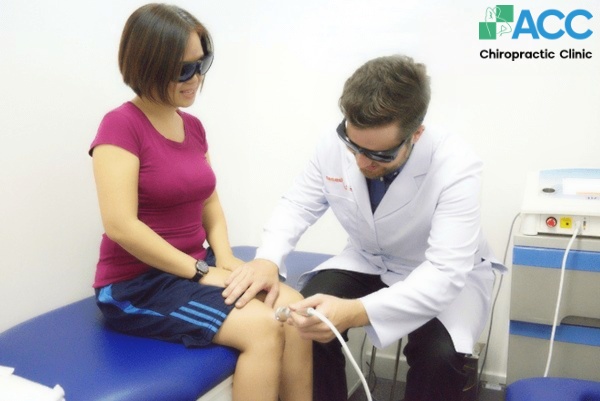
Depending on the condition, our doctors design a specialized protocol, including:
- Chiropractic Adjustments: To realign the spine, pelvis, knees, and feet, correcting imbalances in body movement.
- Medical Grade Orthotics: To realign the biomechanics of the feet, thereby improving and reinforcing knee joint balance.
- Class IV Laser Therapy and Shockwave Therapy: To accelerate cartilage regeneration and reduce inflammation.
- Supplements: Glucosamine Sulfate, Chondroitin Sulfate, MSM, and essential vitamins/minerals to repair damaged cartilage and soft tissues.
- Rehabilitative Exercises: Guided movements to improve the long-term structure of the knee.
- RockTape: Used by specialists to reduce swelling, enhance circulation, and provide immediate pain relief.
Once the pain is resolved, patients should maintain healthy lifestyle habits, control their weight, and ensure proper nutrition to prevent recurrence. Do not rely on unverified sources to decide “what medication to take,” as this may lead to dangerous side effects.
>> Related posts: