






Contents
According to statistics in Vietnam, shoulder pain is the third most common condition, following spine and knee pain. Among these cases, rotator cuff tendinitis accounts for a significant percentage. However, due to its initially mild symptoms, many people ignore the condition, leading to serious complications. In the following article, join ACC to gain a deeper understanding of this condition and discover effective ways to overcome it.
1. What is Rotator Cuff Tendinitis?
Rotator cuff tendinitis is a condition where the tendons of the rotator cuff become inflamed, sometimes accompanied by calcium deposits in the tendons, causing persistent pain and discomfort.
According to statistics in Vietnam, up to 2% of the population suffers from rotator cuff syndrome, accounting for 12.5% of all musculoskeletal cases. Previously, this condition was most common in middle-aged individuals as joints gradually degenerated. However, the rate of young people experiencing rotator cuff inflammation is currently rising, primarily due to injuries or improper shoulder movement.

2. Causes of Rotator Cuff Tendinitis
There are several causes leading to rotator cuff tendinitis, including:
2.1. Pathological complications
Typical medical conditions that cause rotator cuff tendinitis include shoulder joint degeneration, poor blood supply to the tendons, subacromial bursitis, tendinitis, tendon tears, and rotator cuff degeneration.
2.2. Injuries causing shoulder pressure
Using your hands to break a fall or putting excessive pressure on the shoulder during an accident can force the shoulder to bear a heavy load, leading to bruising or tearing of the rotator cuff tendons.
2.3. Poor posture in daily activities
Lifting heavy objects or repeatedly reaching overhead with incorrect posture can cause inflammation or tearing of the rotator cuff. This is especially common in:
- Side sleepers: People who habitually sleep on one side.
- Occupational risks: Professionals who frequently reach overhead (painters, carpenters, etc.).
- Athletes: Those involved in weightlifting, golf, basketball, volleyball, etc.
2.4. Aging
Aging is one of the primary factors that naturally leads to a higher risk of rotator cuff tendinitis.
3. Symptoms of Rotator Cuff Tendinitis
In the early stages, rotator cuff tendinitis often presents with mild symptoms that are easily ignored or overlooked. Typical signs include:
- Mild shoulder pain: Discomfort in the shoulder area during activity or even at rest.
- Swelling and tenderness: Pain and swelling localized at the top of the shoulder joint.
- Radiating pain: Pain that extends from the front of the shoulder joint down to the outer side of the arm.
- Sharp pain upon movement: Intense aching when touching the shoulder area or when lifting the arm abruptly.
- Audible clicking: A “clicking” or “popping” sound when moving the shoulder joint.
Over time, rotator cuff inflammation progresses and worsens with the following symptoms:
- Severe, debilitating pain: Intense aching that prevents the patient from lifting their arm. Daily activities such as brushing hair or getting dressed become a struggle.
- Significant lifestyle impact: For right-handed individuals, experiencing rotator cuff tendinitis in the right shoulder significantly disrupts daily life (and vice versa).
- Progressive muscle weakness: Shoulder muscles gradually weaken, leading to a restricted range of motion compared to before.
- Nocturnal pain (Night pain): Pain frequently flares up at night, causing insomnia and forcing the patient to constantly change positions to find relief.
- Total loss of mobility: In severe cases, the shoulder muscles lose their ability to move, accompanied by persistent, agonizing pain.

4. Dangerous complications of Rotator Cuff Tendinitis
Do not underestimate the early signs of rotator cuff inflammation. If left untreated, the condition can lead to several dangerous complications:
- Chronic Tendinitis: The inflammation can become chronic, making treatment far more complex, time-consuming, and costly.
- Frozen Shoulder (Shoulder Stiffness): The joint may become stiff, leading to a marked decrease in the frequency and efficiency of shoulder movement.
- Loss of Mobility and Strength: Shoulder muscles lose their flexibility and power, which can impair the functionality of the arms, chest, and back.
- Persistent Pain and Neurological Issues: Recurrent or constant pain even during sleep causes prolonged insomnia, which can potentially lead to various neurological disorders.
5. Diagnosis of Rotator Cuff Tendinitis
When signs of rotator cuff inflammation appear, patients should visit a medical facility for diagnosis and treatment as early as possible. Do not underestimate the condition or rely on self-medicated painkillers for temporary relief. Once the medication wears off, the pain will recur and worsen, potentially leading to dangerous complications.
During the examination, the doctor will conduct physical tests to evaluate whether the shoulder’s range of motion is normal. Additionally, several diagnostic tests may be ordered to assess the severity of inflammation and damage, helping to build a personalized treatment protocol. Common tests include:
- X-ray: Helps detect small bone spurs (osteophytes) or calcification within the tendons.
- Ultrasound: Provides clearer images of soft tissue structures such as tendons and muscles.
- MRI (Magnetic Resonance Imaging): Checks for inflammation, fluid accumulation, or structural damage like tendon tears and degeneration

6. Treatment methods for Rotator Cuff Tendinitis
Applying the correct treatment for rotator cuff inflammation is crucial for a quick recovery and restoring normal shoulder function. Below are some commonly used treatment methods today:
6.1. Rest
This approach is suitable for mild cases where the pain is not severe. Patients should allow the shoulder to rest and avoid reaching overhead or overusing the joint. Typically, the pain will subside and gradually disappear. Additionally, patients can combine rest with cold compresses to alleviate aching and discomfort.
6.2. Pain Medication
Another way to manage pain is through medication. Currently, Non-Steroidal Anti-Inflammatory Drugs (NSAIDs) are widely used. However, you should consult a doctor or pharmacist before use and strictly follow the prescribed dosage, as these medications can cause stomach pain and gastrointestinal bleeding.
6.3. Corticosteroid Injections
Corticosteroids are potent anti-inflammatory agents that doctors inject directly into the shoulder joint to reduce inflammation. This procedure requires a high level of medical expertise and must be performed under strict sterile conditions. If not handled carefully, it can lead to complications such as infection or hemarthrosis (bleeding into the joint), which may cause severe complications or even permanent loss of shoulder function.

6.4. Surgery
When rotator cuff tendinitis has progressed to a severe stage and non-invasive treatments prove ineffective, surgery may be indicated. Currently, there are two primary surgical methods: open surgery or shoulder arthroscopy. The surgeon will expand the subacromial space, remove the inflamed bursa, and perform acromioplasty (reshaping the acromion).
6.5. Chiropractic Care combined with Physical Therapy
This is a safe treatment method, highly regarded in advanced countries such as the United States and Europe. Using gentle manual adjustments, chiropractic specialists realign misaligned joint structures to their original positions. This process naturally alleviates shoulder muscle pain without the need for medication.
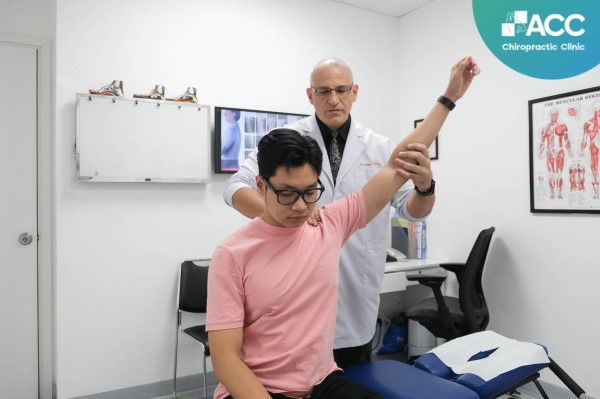
At ACC, Physical Therapy is an integral part of the shoulder treatment protocol, helping to improve mobility and eliminate aching caused by rotator cuff issues. Beyond our renowned team of experienced international doctors, every patient at ACC receives a personalized Physical Therapy roadmap, with dedicated support from doctors and technicians throughout the entire treatment process.
Notably, the integration of advanced medical technologies such as Shockwave Therapy, Class IV Laser Therapy, and RockTape helps alleviate pain and accelerate the regeneration of tissues and cells, leading to a rapid recovery of shoulder function. This combined treatment protocol shortens the healing time, treats the pain at its root cause, and prevents long-term recurrence.

ACC is a pioneer in applying Chiropractic care combined with Physical Therapy and Rehabilitation, fully licensed by the Ministry of Health. With over 16 years of experience, ACC has successfully helped countless patients with spinal and musculoskeletal conditions return to their normal daily lives.
7. Prevention of Rotator Cuff Tendinitis
Keeping these tips in mind will help you effectively prevent rotator cuff inflammation:
- Avoid overusing the shoulder: Ensure the joint has adequate time to rest and recover.
- Minimize pressure on the shoulder: Avoid sleeping on one side for too long or putting direct weight on the shoulder during daily activities.
- Maintain proper technique: If your lifestyle involves frequent shoulder movement (such as sports or heavy lifting), ensure you use correct form and avoid sudden, forceful movements or overextending the shoulder.
- Seek early examination: If you notice any signs of rotator cuff inflammation, consult a specialist promptly.
In conclusion, the above information covers the essentials of rotator cuff tendinitis and its various treatment options. Every part of the body plays a vital role; therefore, when your body “speaks up,” do not ignore it. Listen to the signs and seek early medical consultation for any abnormalities to protect your long-term health.