






Contents
- 1. What is the Role of Scoliosis Exercises?
- 2. 15 Simple and Easy-to-Follow Exercises for Scoliosis
- 2.1. Seated floor exercise to increase lumbar spine mobility
- 2.2. Scoliosis exercise in a seated position
- 2.3. Quadruped exercise to enhance spinal flexibility
- 2.4. Back muscle strengthening exercises
- 2.5. Standing exercises for pelvic and spinal alignment
- 2.6. Deep breathing exercises to improve chest expansion
- 2.7. Physical therapy scoliosis stretches with a stability ball
- 2.8. Spinal decompression with a foam roller or towel
- 2.9. Step-based exercises
- 2.10. Scoliosis exercises using a medicine ball
- 2.11. Scoliosis exercises using the Downward-Facing Dog yoga pose
- 2.12. Back stretching exercise with ball-assisted flexion and extension
- 2.13. Cat/Cow exercise for scoliosis
- 2.14. Bridge Pose exercise
- 2.15. Knee-to-chest resistance exercise for scoliosis support
- 3. Important considerations for scoliosis exercises
- 4. Frequently Asked Questions (FAQ)
Many people are looking for exercises to support the management of scoliosis right from the comfort of their own homes. In this article, you will be guided through 15 simple yet effective exercises designed for individuals with scoliosis. Read on to learn more about how these movements can help improve your spinal health.
1. What is the Role of Scoliosis Exercises?
Scoliosis exercises play a critical role in supporting the correction of spinal curvature and restoring spinal function. When performed under proper guidance, these exercises offer several key benefits:
- Improve Posture and Body Balance: Scoliosis-specific exercises focus on maintaining an upright spine, which helps improve overall balance, prevents spinal misalignment, and supports healthier musculoskeletal structures.
- Strengthen Back and Abdominal Muscles: Targeted training increases the strength of the back and core (abdominal) muscles. This creates a stable “natural brace” for the spine, preventing chronic back pain.
- Increase Spinal Flexibility: Proper scoliosis exercises enhance the flexibility of the spine, significantly reducing tension and discomfort in the back and neck areas.
- Reduce Pain and Prevent Recurrence: Regular practice can help alleviate the aches and pains associated with scoliosis while effectively preventing the recurrence of symptoms.
- Prevent Progression: The primary goal of these exercises is to maintain correct posture, thereby preventing the condition from worsening or causing further complications related to spinal health.
2. 15 Simple and Easy-to-Follow Exercises for Scoliosis
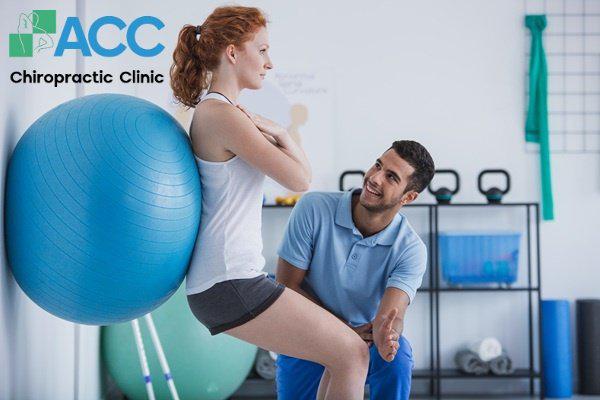
Some scoliosis exercises that are easy to perform at home include the seated floor pose, the seated chair pose, and the quadruped (all-fours) position. Below are detailed instructions for each exercise:
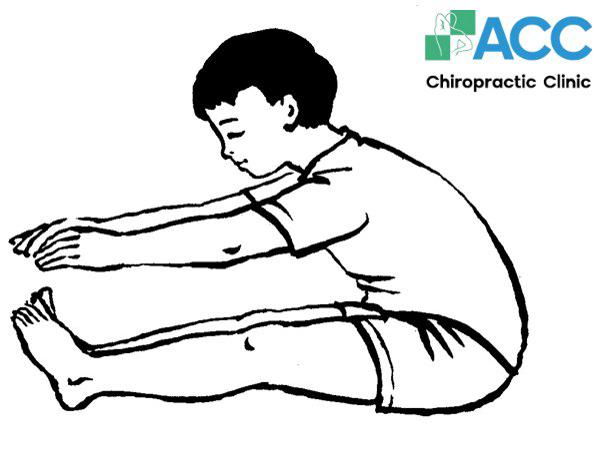
2.1. Seated floor exercise to increase lumbar spine mobility
This exercise focuses on gently stretching the hamstrings and the muscles surrounding the lumbar spine to improve spinal flexibility.
- Starting Position: Sit on the floor with your legs fully extended, pressed together, and flat against the ground. Extend both arms straight out in front of you, parallel to your legs.
- Execution: Slowly reach forward with both hands toward your toes. Gently bend your back forward, moving into a controlled fold. Hold this position for approximately 10 seconds.
- Repetitions: Perform this movement 10 times.
2.2. Scoliosis exercise in a seated position
The goal of this exercise is to stretch the muscles on the concave side of the spinal curve, thereby improving the overall flexibility of the spine.
To perform this, begin by sitting upright on a sturdy chair. Repeat each movement 10 times.
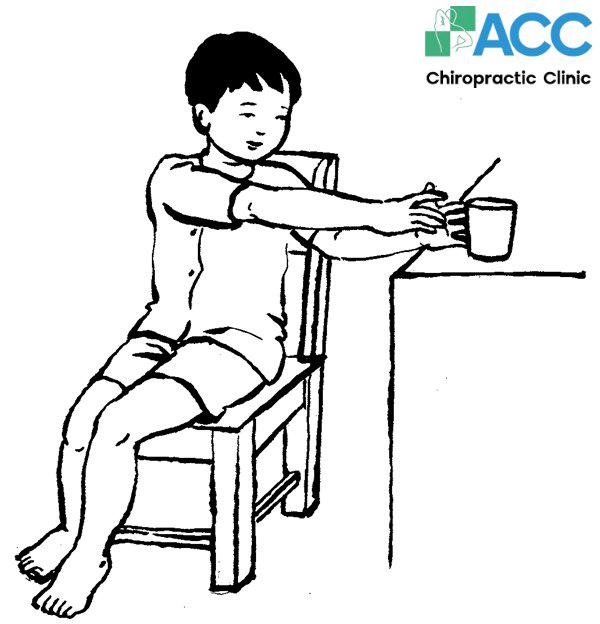
Movement 1: Seated Spinal Twist
- Execution: While seated, rotate your torso to reach for an object or a point on the opposite side of the concave curve of your spine.
- Goal: This controlled rotation helps mobilize the thoracic and lumbar spine, focusing on opening up the tighter, concave side of the curvature.
- Repetitions: Repeat this motion 10 times.
Movement 2
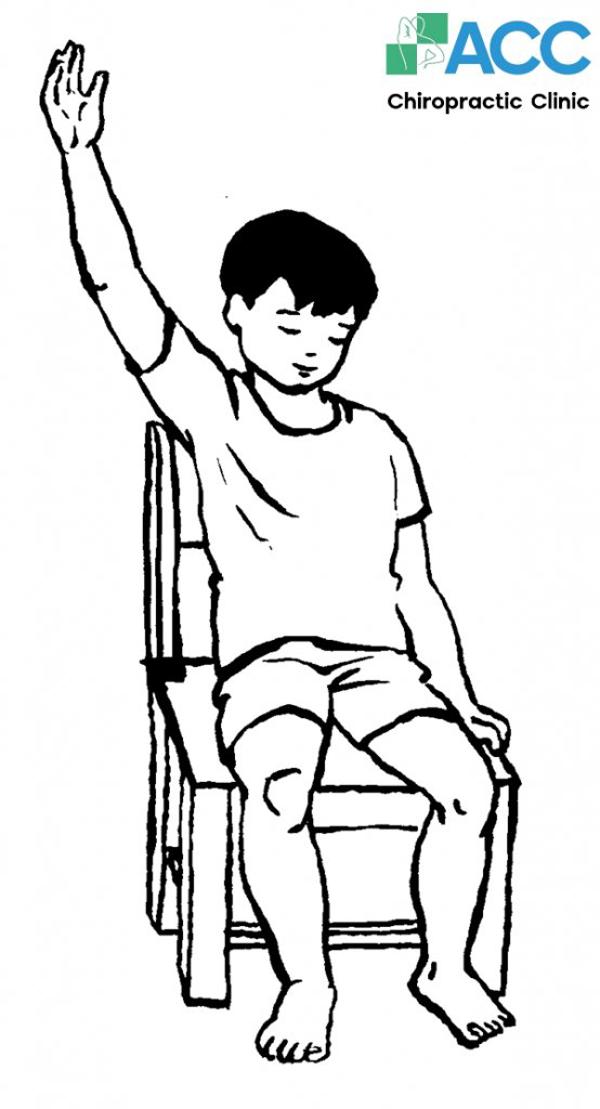
While seated, raise the arm on the side of your lower shoulder high above your head, while using your other hand to grip the edge of the chair for stability. Hold this position for a few seconds.
2.3. Quadruped exercise to enhance spinal flexibility
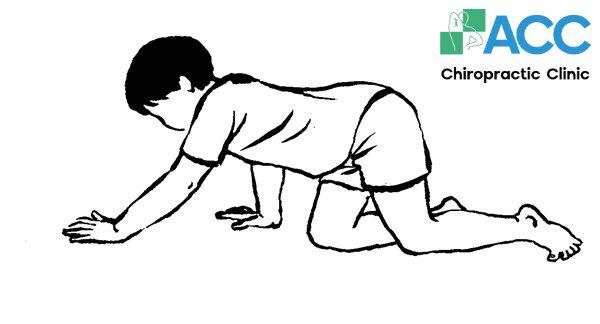
This exercise, often referred to as the “Bird-Dog” variation, helps stabilize the spine while improving coordination and flexibility.
How to perform the quadruped position:
- Starting Position: Begin on your hands and knees in a “tabletop” position (quadruped position). Ensure your hands are directly under your shoulders and your knees are directly under your hips.
- Execution: Slowly extend the arm on the concave side of your spinal curve straight forward. Simultaneously, lift and extend the opposite leg backward.
- Key Focus: Maintain a neutral spine; do not shift your torso or pelvis. Keep your body steady as if there were a glass of water on your lower back.
- Hold: Hold this extended position for a few seconds.
- Repetitions: Perform this movement 10 times.
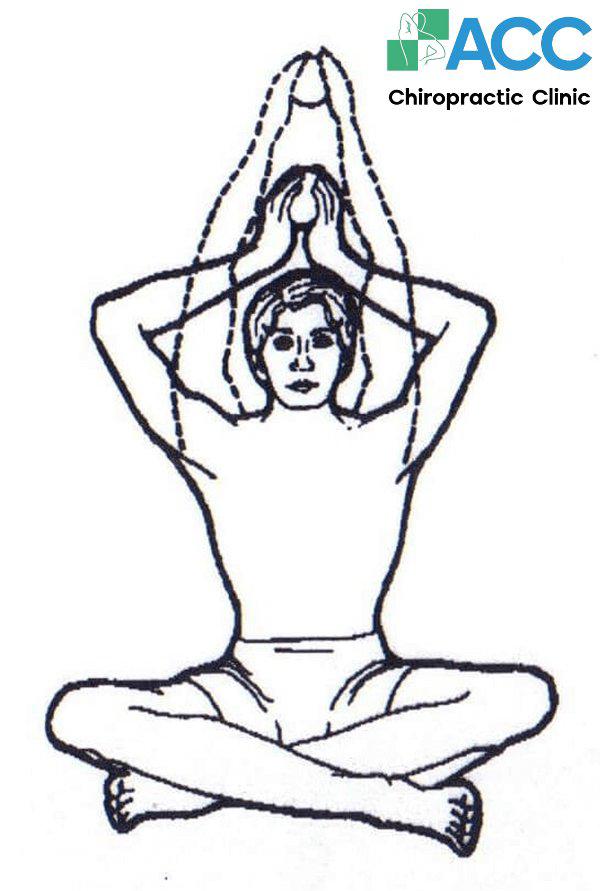
2.4. Back muscle strengthening exercises
The following exercise helps strengthen the back muscles, providing essential support for the spine and aiding in the management of scoliosis:
- Starting Position: Begin by sitting in a cross-legged, meditative position (often referred to as the “lotus” or “easy” pose).
- Execution: Hold a ball (such as a stability or medicine ball) above your head with your arms fully extended. Ensure your elbows remain in contact with the wall behind you to maintain proper alignment.
- Repetitions: Perform this movement several times.
2.5. Standing exercises for pelvic and spinal alignment
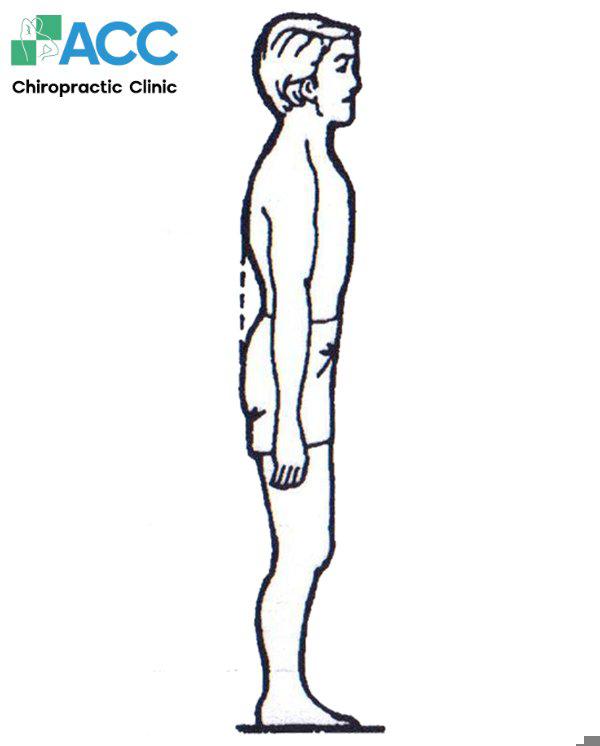
Standing exercises designed for the pelvis and spine are also an essential part of physical therapy for scoliosis. Here is how to perform them:
- Starting Position: Stand straight with your head, shoulders, and back pressed firmly against a wall. Position your heels about 3 inches away from the wall.
- Execution: Slightly relax your knees and tuck your pelvis inward (posterior pelvic tilt).
- Movement: Move your pelvis back and forth while maintaining this slight curve. Aim to practice this movement consistently until you can perform it naturally without the support of a wall.
2.6. Deep breathing exercises to improve chest expansion
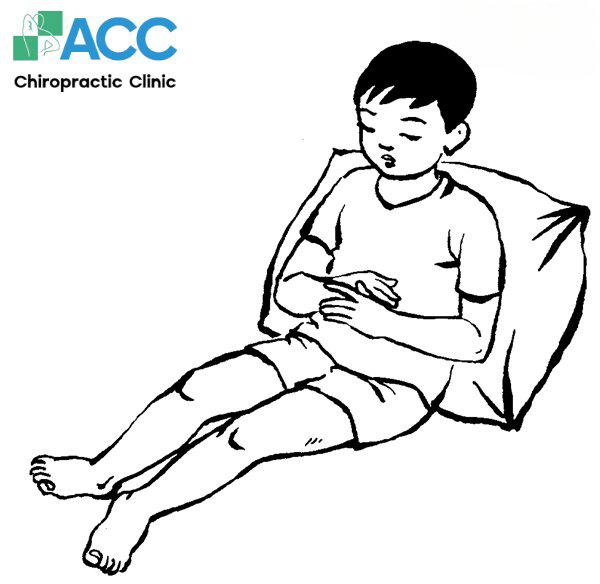
Combining deep breathing with scoliosis exercises helps increase the expansion of the rib cage, which is vital for patients whose respiratory capacity may be restricted by spinal curvature. Follow these steps:
Starting Position:
- Place a pillow or bolster behind your back and lean against it in a semi-reclined (half-sitting, half-lying) position.
- Place both hands under your diaphragm (the upper part of your abdomen, just below the ribs).
Execution:
- Begin by taking a deep breath in through your nose, allowing your abdomen to rise against your hands.
- Exhale slowly through pursed lips.
- Repeat this breathing cycle 10 times.
2.7. Physical therapy scoliosis stretches with a stability ball
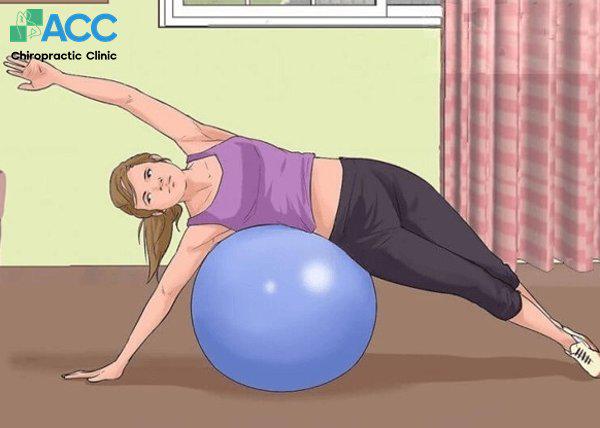
Follow these steps to perform the side-stretch exercise using a stability ball:
- Starting Position: Begin by kneeling on a yoga mat.
- Placement: Position the stability ball at your side. Carefully place the convex (protruding) side of your spinal curve onto the ball.
- Execution: Lean over and rest your body weight on the ball so that it is positioned between your hip and your lower rib cage.
- Balancing: Lower one leg and one arm to the floor to maintain your balance. Extend your other arm straight upward toward the ceiling.
- Hold: Maintain this position for 20-30 seconds.
- Repetitions: Perform this stretch 2 to 3 times.
You can perform this exercise daily to help improve your spinal curvature and flexibility.
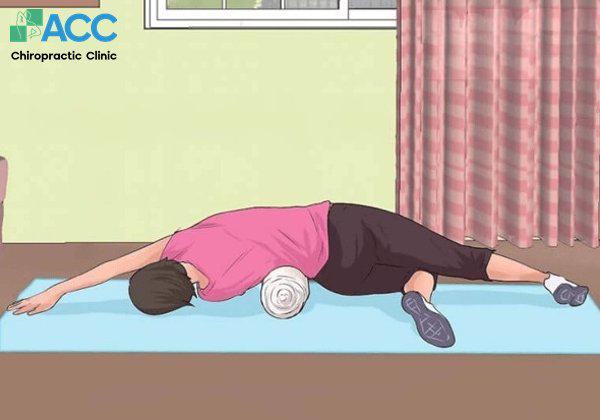
2.8. Spinal decompression with a foam roller or towel
Spinal decompression using a foam roller is an effective exercise for managing scoliosis. Follow these steps to perform it:
- Setup: Use a foam roller or a tightly rolled-up towel. Place it horizontally across your yoga mat, perpendicular to your body.
- Positioning: Lie on your side and place the roller directly under your waist, in the space between your hip bone and your lower rib cage.
- Leg Alignment: Extend your top leg until it is straight. Bend your bottom leg slightly at the knee for stability.
- Execution: Extend your top arm straight over your head until it reaches the floor, ensuring your torso (specifically the side of your waist) is fully stretched.
- Hold & Repetitions: Maintain this position for 20-30 seconds. Repeat 2-3 times. This exercise can be performed daily.
2.9. Step-based exercises
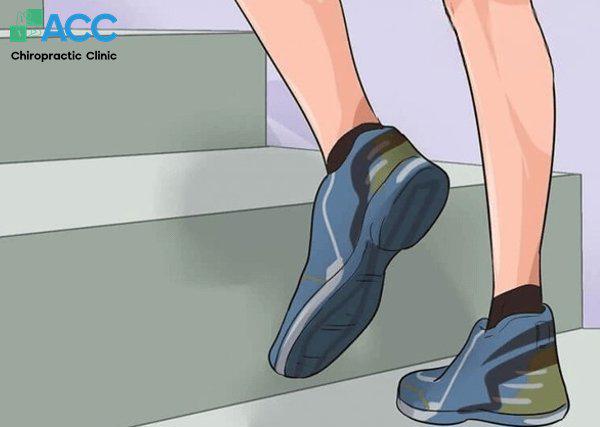
This exercise is particularly suitable for patients whose scoliosis is associated with a functional leg-length discrepancy (where one leg is effectively shorter than the other due to pelvic tilt). Follow these steps:
- Starting Position: Stand at the edge of a step or staircase.
- Execution: Step up onto the step with your “longer” leg (the one that stays higher). As you step up, allow the opposite (“shorter”) leg to hang off the edge, lowering it toward the floor while bending the knee of the leg on the step.
- Coordination: Simultaneously, raise the arm on the same side as the lowered leg as high as you can. For example, if you are lowering your left leg, reach your left arm upward toward the ceiling.
- Frequency & Duration: This exercise can be performed 2-3 times daily, with approximately 5-10 repetitions per session, depending on your physical strength and comfort level.
- Important Note: Perform this exercise only on one side (the side requiring correction) and do not switch sides during the set.
2.10. Scoliosis exercises using a medicine ball
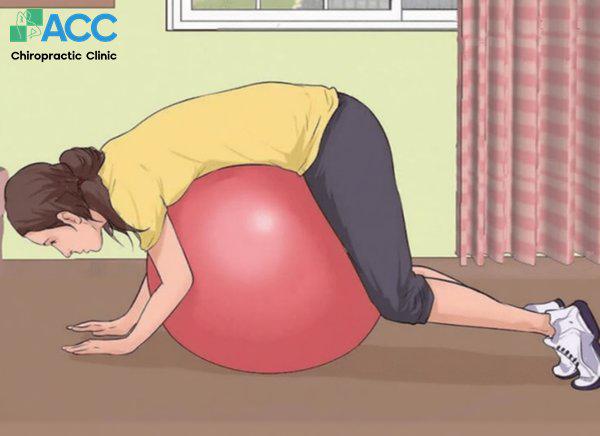
This is another effective exercise for managing scoliosis. Follow these steps:
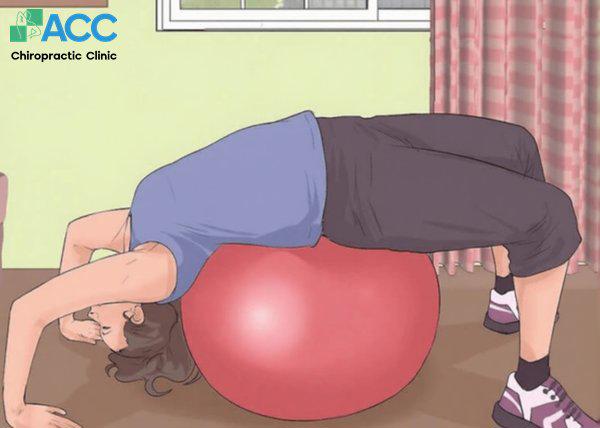
- Starting Position: Begin by kneeling on a yoga mat.
- Execution: Lean your torso forward over the stability ball, allowing your body to relax into a prone position.
- Alignment: From this position, relax your body so that your back is perpendicular (at a 90-degree angle) to the ball. Simultaneously, ensure your arms and legs are also perpendicular to the ball (hanging down toward the floor).
- Hold: Maintain this position for 10 counts (counting from 1 to 10).
- Repetitions: Perform this exercise 10 times.
2.11. Scoliosis exercises using the Downward-Facing Dog yoga pose
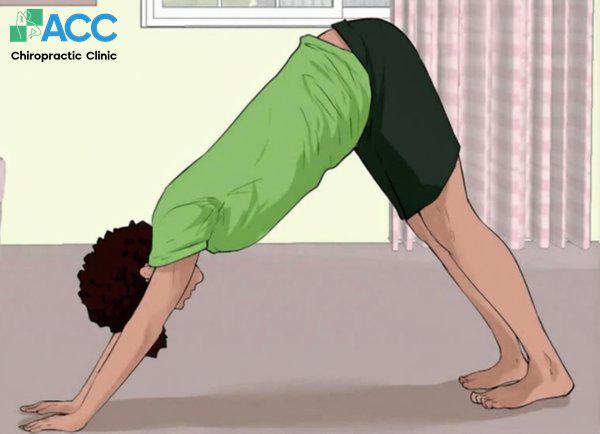
The Downward-Facing Dog pose (Adho Mukha Svanasana) is excellent for lengthening the spine and stretching the entire posterior chain. Here is how to perform it:
- Starting Position: Begin in a high plank position. Keep your abdomen engaged, legs extended, and arms firmly planted on the floor with your hands shoulder-width apart.
- Execution: Maintaining your hand placement on the floor, slowly push your hips and buttocks upward toward the ceiling. Your body should form an inverted “V” or triangle shape.
- Hold: Maintain this position for approximately 5 seconds.
- Return: Slowly lower yourself back down into the plank position.
- Frequency: Practice this daily, 2-3 times per session, performing 5 to 10 repetitions each time.
2.12. Back stretching exercise with ball-assisted flexion and extension
This exercise targets core stability and spinal mobility. Follow these instructions:
- Starting Position: Begin by sitting on the stability ball with your feet flat on the floor, legs bent at a 90-degree angle to maintain balance.
- Execution: Carefully lean your torso backward until your body forms a “tabletop” position (your torso should be parallel to the floor).
- Arm Movement: Hold light weights in your hands. Keep your elbows flexible and tucked close to your body. Extend your arms parallel to the ground, then lower them in a controlled motion.
- Repetitions: Perform 3 sets, with 10 repetitions per set.
2.13. Cat/Cow exercise for scoliosis
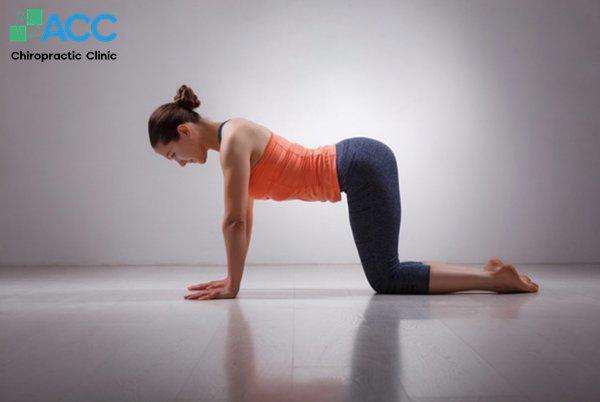
This is an effective stretching exercise that helps increase the body’s overall flexibility. Follow these steps to perform it:
- Starting Position: Position your hands and knees on the floor or a yoga mat. Ensure your hands are shoulder-width apart and your knees are hip-width apart.
- Cat Pose: Arch your back upward as high as you can until you feel the back muscles fully stretched. Tilt your pelvis forward, engage your abdominal muscles, squeeze your glutes, and hold this position for 1-2 seconds.
- Cow Pose: Push your buttocks upward and allow your back to sag/dip downward as much as possible. Hold this position for 1-2 seconds.
- Repetitions: Repeat this movement 5-10 times.
2.14. Bridge Pose exercise
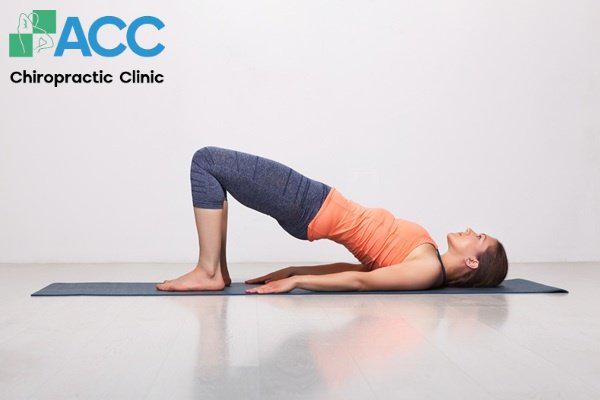
This exercise, which mimics the shape of a bridge, helps strengthen the legs and hips while providing essential support for a curved spine. Follow these steps to perform it:
- Starting Position: Lie on your back on the floor or a yoga mat. Place your feet hip-width apart and bend your knees.
- Execution: Push your hips upward, keeping your feet firmly planted on the floor. Tighten your core (abdominal muscles) throughout the entire movement to engage your core and glute muscles.
- Hold: Maintain this position for 1-2 seconds, then slowly lower your body back down.
- Repetitions: Repeat this movement 5-10 times. Perform this session 1-2 times daily.
2.15. Knee-to-chest resistance exercise for scoliosis support
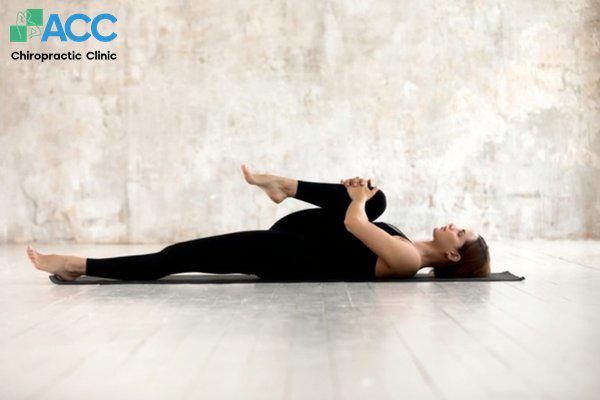
This exercise helps strengthen the core muscles, which are essential for protecting the hips, lower back, and spine. A weak core often leads to fatigue, difficulty maintaining balance, poor posture, and increased susceptibility to scoliosis. To perform this, follow these steps:
- Starting Position: Lie on your back on the floor in a comfortable, neutral spinal position.
- Execution: Bend your knees and bring them toward your chest.
- Active Resistance: Use your hands to pull your knees closer to your chest. Simultaneously, use your abdominal (core) muscles to push back against this pressure. You will feel your core muscles naturally contract and tighten during this resistance.
- Hold & Repetitions: Hold this position for 3 seconds and repeat the movement 10 times.
3. Important considerations for scoliosis exercises
When performing exercises to treat scoliosis, it is crucial to consult with a physician, train under professional supervision, maintain consistency, and adopt a healthy lifestyle. Detailed guidelines are as follows:
3.1. Consult your doctor and train under professional supervision
Patients should consult a doctor to select exercises appropriate for their specific condition. Furthermore, the training process requires observation and adjustments from a qualified professional to ensure movements are performed correctly, preventing further injury to the spine.
How to choose the RIGHT place for safe and effective scoliosis physical therapy?
Physical therapy is considered a vital method to improve motor function and limit the progression of scoliosis. However, with so many treatment facilities available today, choosing a safe, suitable, and effective place for therapy is not simple. Below are some criteria to help you choose the right facility:
- Affiliation with reputable medical institutions: Reliable facilities are often associated with renowned medical groups (such as the leading Thomson medical group in Singapore) and have at least 20 years of establishment. Combining international quality standards with a deep understanding of the Vietnamese physique provides patients with accurate and effective treatment.
- Highly qualified doctors: The medical team must possess extensive expertise, with at least 10 years of experience in treating musculoskeletal issues. This allows them to design scientific exercise programs tailored to each patient’s condition. Combining these exercises with other methods (such as Chiropractic or physical therapy) ensures that patients receive the RIGHT treatment with the RIGHT scientific protocol.
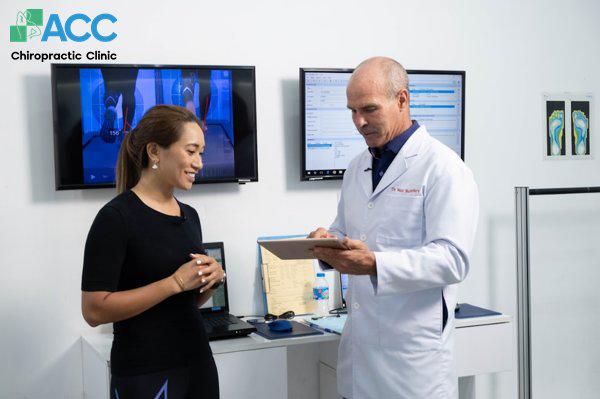
- Professional team of physical therapy and rehabilitation technicians: Patients should choose a facility with licensed, certified, and highly experienced physical therapy and rehabilitation technicians. These specialists will guide patients through appropriate exercises to accelerate the recovery process.
- Modern rehabilitation equipment: A reliable treatment facility should be equipped with advanced technology, such as DTS spinal decompression tables, shockwave therapy machines, high-power lasers, posture correction devices, and the Pneumex Pneuback rehabilitation system. These tools ensure that training is performed safely and more effectively.
- Progress monitoring and relapse prevention guidance: Patients receive guidance on home-based exercises, counseling on proper posture for daily activities and work, and are monitored through periodic follow-up examinations. This empowers patients to actively participate in their recovery and maintain long-term musculoskeletal health.
3.2. Consistency in training
Patients should remain committed to performing their scoliosis exercises correctly. Maintaining a regular exercise routine is essential and will lead to significant improvements in symptoms over time.
3.3. Incorporating a healthy lifestyle and habits
Beyond the exercises mentioned above, it is equally important to adjust your daily habits and posture to maximize treatment effectiveness. Please take note of the following:
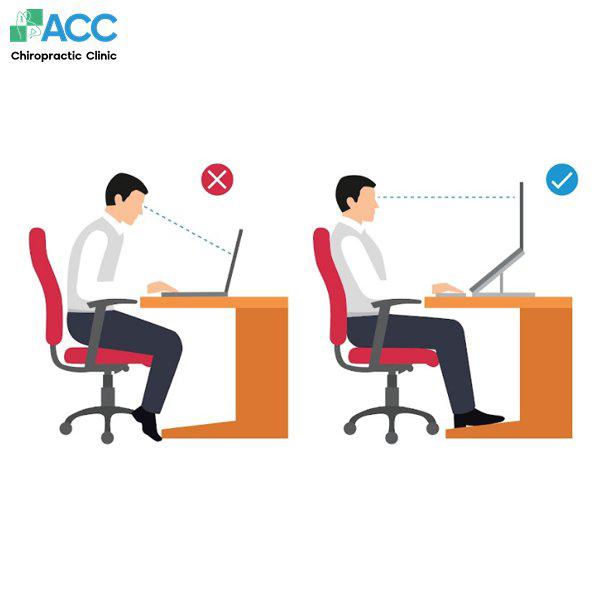
- Avoid excessive neck flexion: Minimize looking down for prolonged periods when working, studying, or using your smartphone.
- Maintain proper posture: Ensure you maintain correct sitting and standing alignment to reduce unnecessary pressure on the spine.
- Proper lifting techniques: Avoid carrying objects that are too heavy or lifting items with improper technique, as this places significant stress on the spine.
- Avoid high-impact sports: Steer clear of sports that involve frequent direct physical contact or a high risk of falling and sustaining severe injuries, such as soccer or basketball.
4. Frequently Asked Questions (FAQ)
This article summarizes and answers common questions regarding scoliosis exercises:
4.1. Which exercises should scoliosis patients avoid?
Scoliosis patients should avoid high-intensity exercises or sports that are performed continuously for many hours (such as professional swimming or competitive gymnastics). Additionally, sports that predominantly use one side of the body, such as golf or tennis, are generally not recommended as they can increase muscle imbalances.
4.2. Can pull-ups be used to treat scoliosis?
Yes, they can. Pull-ups help decompress the spine, creating space between the vertebrae and reducing pressure on the back. However, this is an advanced exercise, so patients must perform it under the supervision of a doctor or physical therapist.
4.3. Can squats worsen scoliosis?
It depends on the severity of the spinal curvature and the technique used. When performed with proper form, light squats can help strengthen the back and leg muscles, which supports better posture. However, without good control or if performed incorrectly, this movement can place excessive pressure on the spine and worsen the curvature. It is best to consult a professional before attempting squats.
4.4. Can scoliosis patients perform planks?
Yes, but they must be performed correctly to ensure safety and effectiveness. Planks strengthen the core muscles, which helps stabilize the spine. Patients must maintain a straight line from their head to their heels, avoiding a sagging belly or arched back. If you are unsure of your technique, seek guidance from a professional to avoid placing unnecessary strain on your spine.
4.5. Should scoliosis patients do push-ups?
It is generally not recommended, as push-ups can place significant stress on the spine and increase pressure on the curved area. This can aggravate the condition, especially if the technique is incorrect or performed without expert guidance.
>> Related article: Lesser-known exercises to correct hunchback posture