





Contents
Currently, orthotic insoles are considered a simple and effective method for improving flat feet. However, many people are curious about the medical-grade standards these insoles must meet, as well as how to use and maintain them properly. Understanding these concerns, ACC invites you to follow the article below for a deeper insight!
1. Why do children with flat feet need proper footwear?
Flat feet is a condition where the arch of the foot is flat, lacking the normal hollow curve when standing on a flat surface. Using conventional shoes may fail to provide adequate support, making it difficult for children to walk or engage in physical activities. In contrast, medical-grade orthotic shoes for children are typically designed with reinforced support at the heel and ankle, along with a raised arch. These features help to:
- Distribute weight across the foot: Proper footwear for flat feet ensures that body weight is evenly distributed across the entire foot, thereby reducing pressure on sensitive areas.
- Support balance and reduce injury risk: Specialized shoes help children maintain better balance while standing or walking. Additionally, wearing well-fitting shoes minimizes the risk of accidental injuries.
- Alleviate pain: Shoes with stabilizing features provide comfort and help reduce the discomfort or fatigue caused by flat feet.
2. Popular types of footwear for children with flat feet
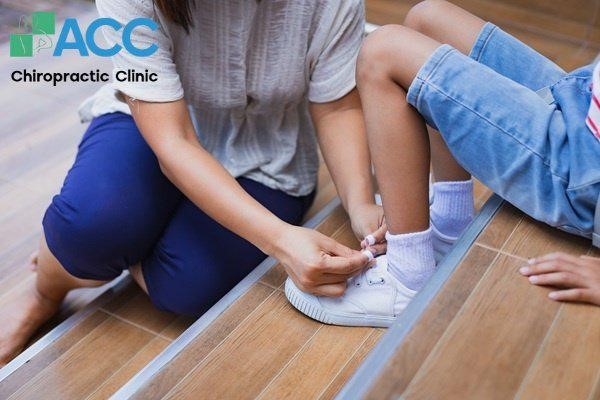
There are three common types of footwear for children with flat feet: sandals with firm soles for ankle support, running shoes with arch support, and orthopedic slides. These are specifically designed to help lift the arches, shape the feet, and reduce pressure during movement.
Parents can refer to the following types of footwear for children:
2.1. Sandals
Children with flat feet can still wear sandals. However, parents should select products with firm, sturdy soles to support the child’s feet. Additionally, look for designs with adjustable straps around the ankle and over the top of the foot to provide better stability for flat feet.
2.2. Running shoes (Sports shoes)
A top choice for children with flat feet is stability running shoes. These shoes are engineered to support the arches and ankles, providing a more stable platform with less tilt compared to standard athletic shoes. Furthermore, the uppers are often made of soft synthetic fabric with cushioning that snugly fits the foot. These shoes come in various stylish designs and colors to match children’s preferences.
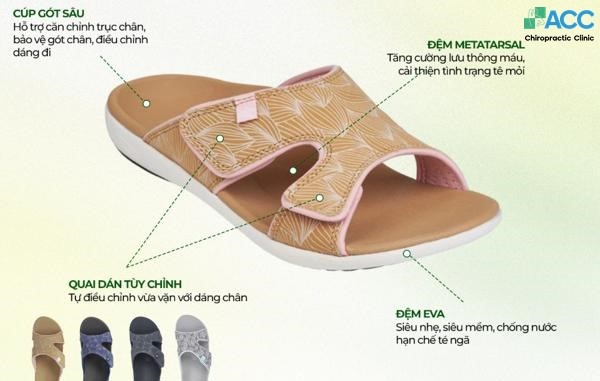
2.3. Orthopedic Slides
This type of footwear features an ergonomically designed footbed tailored to the shape of the sole:
- Forefoot cushioning: Provides elasticity and reduces numbness or fatigue.
- Metatarsal pad: Helps distribute pressure evenly across the midfoot.
- Arch support design: Protects the feet, ankles, and knee joints.
- Deep heel cup: Helps relax the heel and alleviate heel pain.
Additionally, these slides are made from high-quality, slip-resistant materials to prevent falls, allowing children to walk comfortably and confidently.
In general, there are many types of shoes for children with flat feet on the market, but not all products are suitable. Parents need to know how to choose medical-grade footwear to ensure the best arch support and improvement.
3. How to choose medical-grade orthotic shoes for children
To choose medical-standard orthotic shoes, priority should be given to shoes with a firm, sturdy heel counter to stabilize the heel bone, arch support insoles designed with precise medical ratios, and a wide, dome-shaped toe box for toe comfort. The soles should be resilient and slip-resistant, made from breathable materials. Most importantly, it is essential to consult a doctor for personalized orthotic insoles, which help shape the feet correctly and prevent future spinal or ankle issues.
3.1. Personalized orthotic insole sizing
Every child has a unique foot structure and degree of flatness; therefore, the size and shape of the orthotic insole must be individually measured and designed. An insole that is too high or too low will be ineffective and may even cause discomfort or lower limb misalignment. Medical-grade insoles must fit the foot arch perfectly and have the correct thickness to provide natural support as the child walks.
3.2. Arch support capability
Orthotic shoes for children must feature a distinct arch support system they should never be completely flat. A properly elevated arch helps distribute force evenly during movement, reducing pressure on the heel and forefoot. Additionally, this design stimulates the proper development of foot muscles.
3.3. Breathable and easy-to-clean materials
Flat feet shoes should be made from soft, breathable fabric or leather to reduce sweating and prevent skin irritation. At the same time, easy-to-clean materials help maintain hygiene, extend the lifespan of the footwear, and minimize skin sensitivity. The inner lining should also possess good moisture-wicking properties.
3.4. Other essential factors
When choosing orthotic shoes for your child, please consider the following:
- Secure laces or Velcro straps: These help secure the foot and prevent sliding inside the shoe during activity.
- Good grip and moderate elasticity: Reduces the risk of slipping and absorbs shock during running and jumping.
- Roomy toe box: Ensures toes have natural space and are not cramped, which could lead to deformities.
- Avoid high heels or overly soft shoes: High heels misalign the foot axis, while overly soft shoes provide no arch support.
4. Combining well-fitting shoes with medical orthotics for flat feet treatment
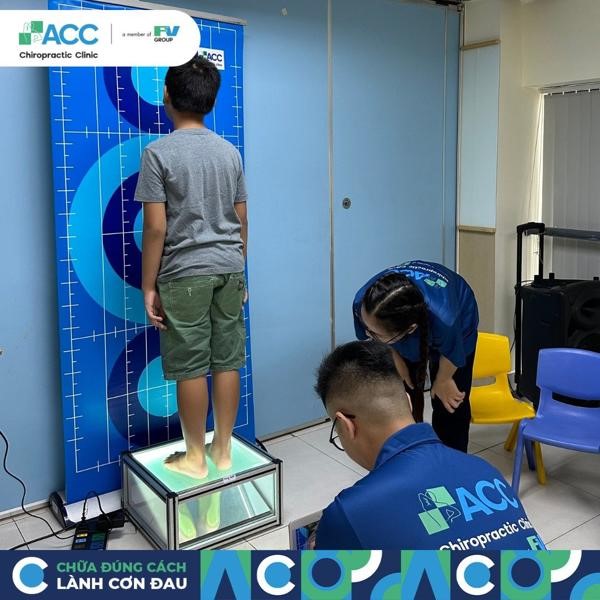
The only insoles truly effective in treating flat feet are medical orthotics, custom-designed for each individual patient. Recognizing this, ACC Clinic – a pioneer in flat feet treatment offers an intensive diagnostic and treatment program. In addition to being monitored by a team of leading 100% expatriate doctors, patients undergo a formal foot assessment using:
(1) Specialized Podoscope: Designed with heavy-duty transparent glass, optimally positioned mirrors, and a lighting system that allows clear observation of weight-bearing areas under the feet while the patient stands. This clearly displays the concave and convex areas of the foot arch, enabling an accurate assessment of the degree of flatness.
(2) Advanced Swiss CAD-CAM technology with outstanding advantages:
- Provides detailed data on the height, thickness, and shape of the foot with greater precision than conventional 2D imaging techniques.
- Non-weight-bearing measurement: The feet are measured without the need for movement or pressure, ensuring a comfortable experience with no pain or discomfort.
- Identifies optimal positioning to evenly distribute body weight, restoring the body’s structure to a balanced state.
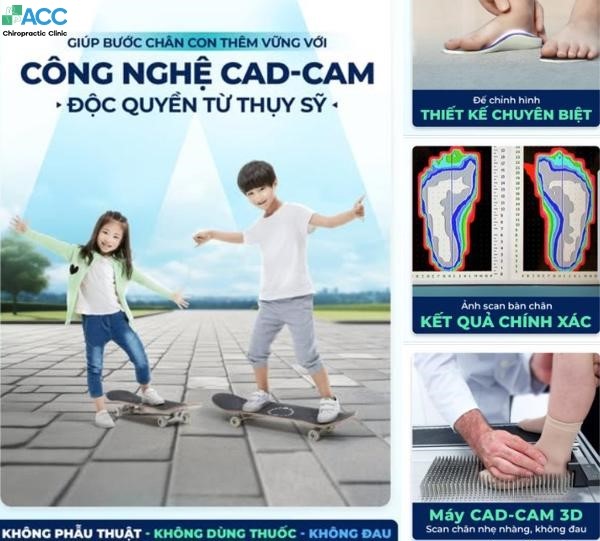
Based on these parameters, ACC doctors will fabricate custom medical orthotic insoles for each patient. As a result, patients receive perfectly fitted orthotics that provide maximum support for arch formation, leading to optimal treatment outcomes for flat feet.
ACC’s Doctor stated: “The regular use of convenient flat feet footwear combined with orthotic insoles will help the child’s foot bone structure return to a balanced position. This supports mobility and corrects the child’s gait, thereby helping them avoid the risk of falls and preventing scoliosis (*) caused by flat feet.”
(*) Scoliosis is a condition where the vertebrae are curved to one side or undergo complex rotation. This condition is closely linked to flat feet syndrome but is often overlooked because people assume flat feet only cause difficulty in movement. In reality, flat feet can cause the bones in a child’s lower legs to rotate during walking or running, leading to misalignment of the knee joints. More seriously, this misalignment leads to scoliosis. Without timely intervention and treatment, it can significantly impact the child’s appearance, psychology, range of motion, and height growth.
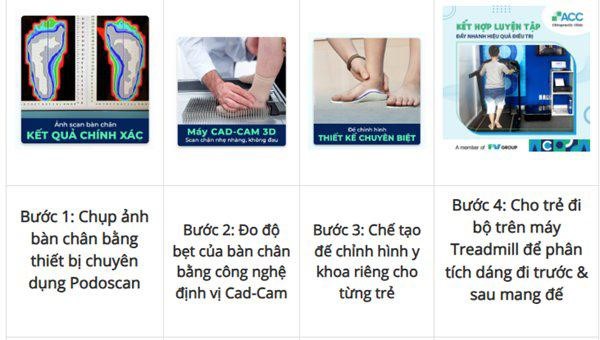
With the desire to give children the opportunity for comprehensive health monitoring and early detection of abnormalities in the feet and spine, ACC offers a premium screening program: Children who come for a flat feet examination will receive a FREE spinal check-up from a doctor, and vice versa. Accordingly, the examination process at ACC includes the following steps:
Parents can enjoy peace of mind with our team of musculoskeletal specialists and highly experienced technicians. Children receive personalized examinations and treatment plans to achieve optimal results. Furthermore, doctors provide nutritional advice and guide home exercises to accelerate and maintain treatment effectiveness, helping children grow healthy, maintain proper posture, and walk with confidence.
Book an appointment with ACC today; parents can rest assured that their children will receive accurate screenings for flat feet and scoliosis from our team of experienced experts.
5. Frequently Asked Questions (FAQs)
5.1. Are all shoes for children with flat feet the same?
No, not all shoes for children with flat feet are identical. The most significant difference lies in the personalized insole design, which must be tailored to each child’s foot size and degree of flatness. Therefore, it is best for parents to take their children to specialized treatment centers equipped with the necessary technology to measure the degree of flatness and design appropriate orthotic insoles.
5.2. How often should you replace your child’s shoes?
Timely shoe replacement is essential to protect a child’s feet and prevent tripping, especially for those with flat feet. Parents should replace their child’s shoes when they notice the following signs:
- Significant wear and tear on the outsoles.
- Damaged insoles that have lost their shock-absorption capability.
- The child feels uncomfortable or experiences pain while wearing the shoes.
- Visible damage, such as tears or broken components.
- Hygiene or persistent odor issues.
- The shoe’s shape is visibly deformed.
- The shoes have been worn for over 300-500 miles (as recommended by the American Orthopaedic Society for Sports Medicine).
5.3. What should be noted when using footwear for children with flat feet?
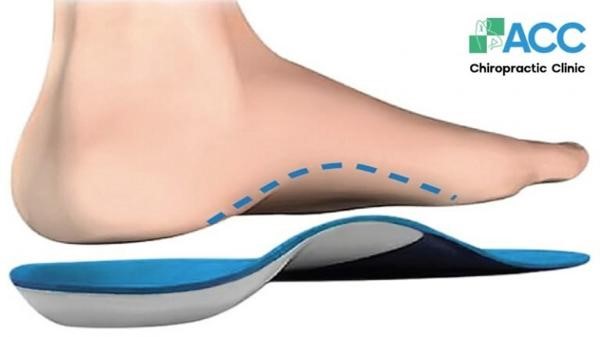
ACC”s Doctor shares: “To optimize mobility support and foot arch shaping, children with flat feet should wear shoes combined with orthotic insoles consistently during daily walking or whenever the feet are weight-bearing. The insoles play a crucial role in lifting the arch and distributing force evenly during movement, preventing discomfort or misalignment. This provides the best support for treating flat feet, particularly for children in the ‘golden age’ of development between 3 and 7 years old.”
In addition, parents should pay attention to proper shoe maintenance to extend their lifespan and effectiveness:
- Avoid water and soaking: Excessive moisture can cause the adhesive to fail, leather to shrink, or the shoes to become deformed.
- Avoid direct high temperatures: Do not leave shoes under intense sunlight or near heat sources, as this can cause the material to shrink, making the shoes too tight for the child.
- Avoid contact with chemicals: Keep shoes away from gasoline, oil, acids, etc., as these substances can weaken the material and reduce supportive effectiveness.
In general, selecting orthotic shoes for children combined with medical-grade insoles from a reputable healthcare facility remains the top priority. ACC Clinic is proud of nearly 20 years of experience in diagnosing and treating flat feet, successfully treating thousands of children both locally and internationally.
BOOK AN APPOINTMENT with ACC Clinic now for more detailed information!