








Contents
Many people with herniated discs wonder if lying down frequently is beneficial. The common belief is that rest reduces pressure on the spine, leading to quick pain relief. But what is the actual, medically sound answer? We’ll explore this in detail in the following article.
1. Should people with herniated discs lie down a lot?
People with herniated discs should avoid lying down excessively or being overly active. Lying down for prolonged periods increases pressure on the disc, potentially causing it to bulge further and compress nerves. Moreover, extended periods of rest and lack of movement can lead to muscle stiffness and reduced flexibility.
Therefore, rest during the day should be balanced, including the main sleep of approximately 8 hours and an additional 1-2 hours of daytime rest.
2. How do sitting and lying postures affect people with herniated discs?
Sitting, standing, and lying postures significantly impact the health of individuals with herniated discs. Maintaining correct posture can lessen pressure on the spine, relieve back pain and neck stiffness, and support the function of muscles, joints, and the spine.
Conversely, sitting for too long or with incorrect posture can cause muscle stiffness, increasing pressure on the intervertebral discs and stressing ligaments and the spine. Specifically, poor standing or lying posture can cause disc displacement, worsening the condition.
Correcting posture is essential not only for pain reduction but also for supporting recovery and preventing the condition from progressing.

3. Suggested Good Sitting Postures for People with Herniated Discs
Prolonged sitting can exacerbate herniated disc symptoms, according to experts. However, for professions like office work, extended sitting is often unavoidable.
To mitigate this problem, doctors recommend the following ergonomic sitting postures:
- Maintain a straight back to minimize spinal pressure. Use an ergonomic chair designed for spinal support or a chair with a rigid, straight backrest.
- Position your elbows at a 90-degree angle while working at a desk.
- Ensure the computer screen is at eye level.
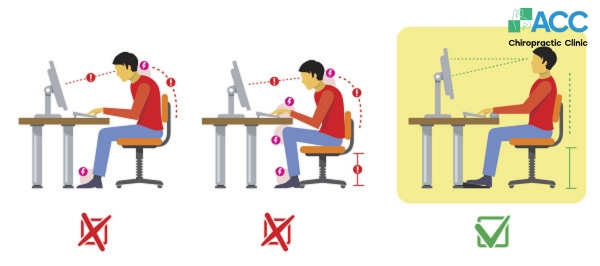
Simultaneously, limit head bending or looking up to avoid extra pressure on your cervical vertebrae by:
- Maintaining an appropriate chair-to-screen distance. Sitting too close can strain your eyes. Conversely, sitting too far forces you to lean forward, negatively impacting your lumbar and cervical spine.
- Adjusting lighting appropriately. Low light intensity can cause a hunched posture, harming both the lumbar and cervical spines.
In addition, when applying proper sitting posture for people with herniated discs, note the following:
- Adjust the chair height so your feet always rest flat on the ground.
- If your feet don’t reach the floor, use a footrest or prop instead of straining to stretch them.
- Stand up and perform light exercise every 45-60 minutes to relieve pressure on your spine.
4. Correct Sleeping Positions for People with Herniated Discs
When suffering from a herniated disc, in addition to sitting posture, you also need to pay attention to sleeping posture. In fact, many studies show that sleeping posture not only affects the condition of the spine but also directly affects sleep. In all cases, sleep quality always plays an important role in maintaining overall health.
Therefore, experts have suggested the following sleeping positions for people with herniated discs:
4.1. Lying on your side with knees bent
This simple position is highly recommended for people with lumbar herniated discs. By lying on your side and bending your knees, you can:
- Gently stretch the spine.
- Increase the space between joints, reducing pressure on the disc.
- Promote more relaxed leg muscles.

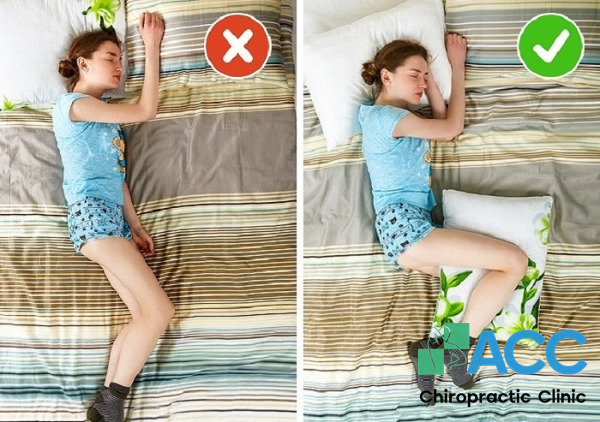
4.2. Lying on your side with a pillow between your legs
Recommended Side-Lying Position:
- Pillow Placement: Place a small pillow between your knees.
- Leg Position: Your legs should be only slightly bent, not fully flexed.
Alternative Support:
- You can also use a small lumbar support pillow. This pillow should be positioned to help maintain the natural curve of your spine by slightly elevating the hip and pelvic area, which, in turn, reduces pressure on the spine.
4.3. Lying on your stomach with a pillow (or blanket) under your belly
This position is primarily beneficial for individuals with cervical disc herniation. Lying on your stomach can help soothe and relax the neck and upper back. Furthermore, placing a pillow (or blanket) under the belly prevents excessive arching of the lower back.
However, experts generally advise against this sleeping position as it can negatively impact the heart and lungs due to the pressure of lying face down.

4.4. Lying on your back with a pillow under your knees
This sleeping position is widely recognized as an effective treatment for herniated discs, as it not only alleviates pain but also enhances sleep quality. By placing a pillow under your knees, this posture helps to balance spinal forces and restore the spine’s natural physiological curve.
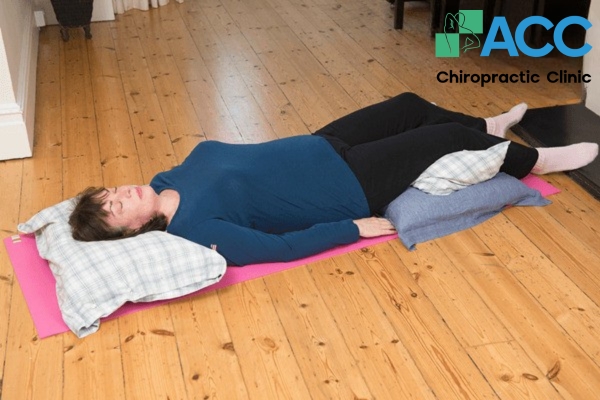
While lying down too much is not recommended for people with a herniated disc, maintaining correct posture and engaging in reasonable exercise are important to reduce spinal pressure.
Additionally, patients should be cautious about overusing medication due to the risk of serious complications like liver and kidney damage, and a high chance of recurrence. Therefore, alongside adopting the correct posture, proper medical treatment is crucial to maximizing the chances of recovery from a herniated disc.
| Non-Drug and Non-Surgical Treatment for Herniated Discs at ACC As more people seek gentle, non-invasive treatments for herniated discs, non-surgical and drug-free therapies are becoming the preferred choice. In Vietnam, ACC Clinic is a trusted address, offering patients scientific treatment protocols that minimize risks and maximize effectiveness. ACC confidently delivers optimal results by utilizing Chiropractic therapy, administered by a team of highly qualified doctors with over 15 years of experience. This therapy works by correcting spinal misalignments, allowing slipped discs to return to their natural position, which in turn alleviates pain symptoms. 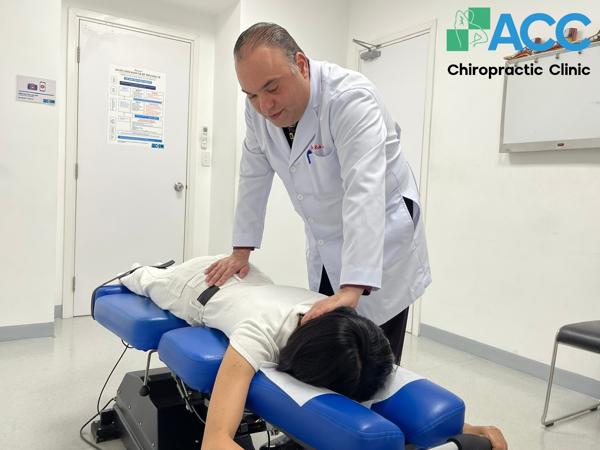 Specialist doctors at ACC integrate physical therapy and rehabilitation into their treatment programs, employing effective and safe methods such as:
Don’t let the pain caused by a herniated disc torment you and disrupt your life. Schedule an appointment with ACC’s team of experienced foreign neurosurgeons for consultation and treatment today! |
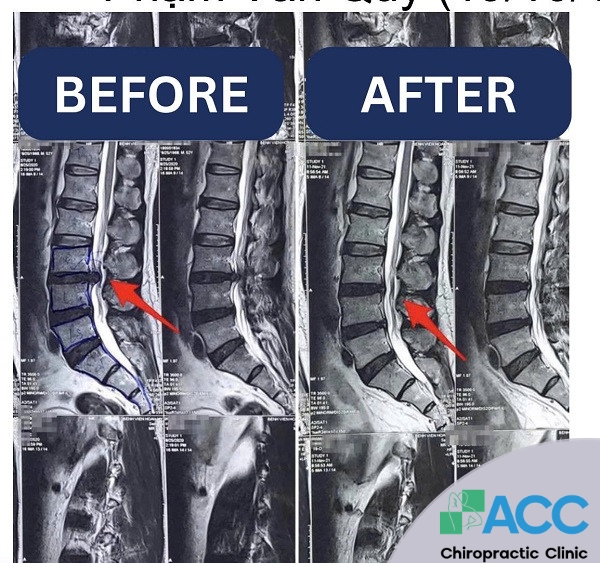
Herniated discs often don’t require surgery. Did you know discs can fully recover? See the proof in the before and after MRI images below. This patient was previously bedridden from back pain, yet avoided surgery and regained a normal life after just 31 treatment sessions over 7 months at ACC.
Persistence is key, and the result is a spectacular recovery! |