









Contents
Cervical spondylosis was once thought to only affect men performing heavy labor or women in menopause. However, there is an alarming trend of increasing cases among young people, particularly office workers. Bone spurs are a form of spinal degeneration that progresses silently. Without definitive treatment, new spurs will continue to develop, leaving patients tormented by persistent neck and shoulder pain. This limits cervical mobility and can eventually lead to severe complications, including paralysis.
1. Causes of Cervical Spondylosis (Neck Bone Spurs)
The presence of bone spurs is a clear signal that our spine is gradually degenerating. In individuals over 60, spinal X-rays commonly reveal the appearance of these osteophytes. As the most active part of the spinal column, the cervical vertebrae are highly susceptible to wear and tear if not properly and regularly cared for.
As the degenerative process unfolds, articular cartilage gradually wears down, causing discs to flatten or herniate. Consequently, the ligaments connecting the vertebrae become slack. Through a self-regulating mechanism, the body increases calcium deposits within the ligament structures to expand the contact area between vertebral bodies and redistribute pressure across the damaged vertebrae. Over time, this calcium buildup forms bone spurs. These bony outgrowths typically emerge around herniated discs, as well as on the front and sides of the cervical spine. Initially only a few millimeters long, these spurs often remain painless until they grow large enough to narrow the spinal canal and foramina, compressing nerve roots and affecting muscular structures, which results in excruciating pain.
While less common, other causes of bone spurs include ankylosing spondylitis, infectious discitis, or spinal tuberculosis.
Furthermore, injuries or repetitive poor posture can lead to constant friction and pressure on the spine. This damages the bones or joints, triggering the body’s self-repair response, which ultimately produces bone spurs.
Nowadays, the onset of bone spurs is increasingly seen in younger individuals under 40. The primary culprits are genetics, obesity, and lifestyle or work habits:
- Genetics: Individuals with certain genetic markers may have inherently weaker vertebrae and discs.
- Obesity: Excess body weight places significantly more mechanical stress on the spine.
- Poor Posture: Daily habits can silently threaten spinal health. Office workers using computers incorrectly, habitually tilting their necks back, or sleeping in a seated position are at high risk of developing cervical bone spurs.
2. Identifying Symptoms of Cervical Spondylosis
Common symptoms of cervical bone spurs include:
- Dull, persistent neck pain: A constant aching sensation in the cervical region.
- Shoulder and nape discomfort: Pain and stiffness radiating across the shoulders and the back of the neck.
- Numbness or tingling: A “pins and needles” sensation (paresthesia) in the arms, which may extend down to the fingertips.
- Restricted mobility: Morning neck stiffness; inability to turn the head left or right independently, forcing the patient to rotate their entire body.
- Headaches: Migraines or sharp, shooting pains reaching the crown of the head.
- Other systemic symptoms: Dizziness, nausea, chronic fatigue, and insomnia.
In cases where the condition is accompanied by cervical disc herniation, severe nerve root compression may occur. This can lead to critical complications such as:
- Paralysis of one or both arms.
- Sensory disorders in the limbs.
- Autonomic nervous system dysfunction.

Typically, a standard X-ray can detect the presence of bone spurs. However, more advanced diagnostic tests such as Computed Tomography (CT scans) or Magnetic Resonance Imaging (MRI) are often necessary to provide a precise diagnosis of the condition’s severity.
If you are experiencing any of the symptoms mentioned above, don’t hesitate to contact us today!

3. Non-Surgical and Drug-Free Treatments for Cervical Spondylosis at ACC
Treating cervical bone spurs is not overly complex, but it requires early detection, the right medical approach, and patient persistence. Failure to follow a proper regimen can easily lead to dangerous complications. Traditional home remedies or Western medications often only provide temporary pain relief rather than a cure. Furthermore, overusing painkillers can lead to drug resistance and cause significant damage to the stomach, liver, and kidneys.
Among the various solutions for bone spurs and cervical degeneration, Chiropractic is widely recognized by advanced medical communities as a highly effective conservative treatment that targets the root cause of pain. In Vietnam, ACC Clinic is the first specialized facility to apply Chiropractic care for the definitive treatment of musculoskeletal conditions.
The Procedure: Our specialized Chiropractic doctors use their hands to apply precise force to misalignments in the cervical spine structure. This process restores the vertebrae to their balanced positions, promoting natural healing without the need for drugs or surgery.
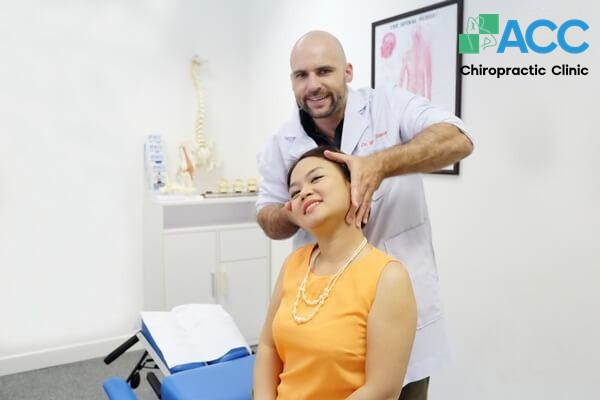
To maximize treatment effectiveness, our doctors may prescribe a combination of Physical Therapy and Rehabilitation. ACC Clinic has successfully helped numerous patients fully restore their neck function even those who were previously candidates for surgery due to severe nerve compression.
Depending on the specific case, patients with cervical bone spurs may receive supplemental treatment with the modern Cervico 2000 neck decompression device. This equipment helps decompress affected areas and restores the natural function of the spinal structure.
ACC is fully equipped with a comprehensive system of supportive technologies, including:
- DTS Spinal Decompression: Advanced traction therapy.
- ATM2 (Active Therapeutic Movement): Movement therapy system.
- Class IV Laser Therapy: High-intensity laser to accelerate tissue repair.
- Shockwave Therapy: Using acoustic waves to stimulate healing in damaged tissues.
These technologies significantly speed up the recovery of injured tissues and shorten the overall treatment duration.
Furthermore, a scientific nutritional regimen plays a vital role in the success of the treatment. Patients should supplement their diet with calcium-rich foods and essential vitamins. These nutrient-dense meals not only support recovery but also help prevent osteoporosis, one of the underlying causes of bone spurs.
ACC Clinic is committed to providing long-term treatment effectiveness, minimizing the risk of recurrence with a success rate of over 95%. Following the treatment regimen, patients simply need to maintain a balanced nutritional diet and engage in regular physical exercise to ensure a stronger, healthier spine.
Watch the video below to hear Dr. Wade Brackenbury (ACC Clinic) share more insights into bone spurs and effective treatment methods:
> > Read more: