





Contents
- 1. What are medications for herniated discs, and when should they be used?
- 2. The most common medications for herniated discs today
- 2.1. Paracetamol (Acetaminophen)
- 2.2. Opioids (Narcotic Pain Relievers)
- 2.3. Central Nervous System Pain Medications
- 2.4. Muscle Relaxants
- 2.5. Corticosteroids (Anti-inflammatory)
- 2.6. Non-Steroidal Anti-Inflammatory Drugs (NSAIDs)
- 2.7. Myelin Sheath Regeneration Enhancers
- 2.8. Neurotropic Vitamins (B1, B6, B12)
- 2.9. Epidural Steroid Injections
- 2.10. Topical Pain Relievers
- 3. Essential precautions when using medication for a herniated disc
Many patients are searching for the best current treatments for a herniated disc. But which medications are truly reliable, and when is the right time to use them? The following article will help answer these concerns. Let’s explore further!
1. What are medications for herniated discs, and when should they be used?
Despite being highly sought after, there is currently no medication that can completely cure a herniated disc. The medicines available on the market are typically used to alleviate uncomfortable symptoms and are often combined with other treatment methods to achieve the best results for the patient.
At the same time, patients should be aware that there is no single “best” medication for a herniated disc. Depending on the individual’s constitution and the specific goals of treatment, each type of drug will offer different benefits and carry different potential side effects.

2. The most common medications for herniated discs today
Here are the most widely used medications for managing herniated disc symptoms:
2.1. Paracetamol (Acetaminophen)
Categorized as an over-the-counter (OTC) analgesic, Paracetamol is commonly used for general joint and bone pain. However, this medication is only effective for mild to moderate pain and does not have anti-inflammatory properties for patients with joint or muscle swelling.
2.2. Opioids (Narcotic Pain Relievers)
Certain opioids such as Oxycodone-Acetaminophen (Percocet), Morphine, or Codeine can be used to improve pain caused by a herniated disc. However, because these medications are addictive, they are only used to relieve symptoms in cases where other medications have failed to provide relief.
2.3. Central Nervous System Pain Medications
Many patients wonder what to take for a herniated disc. Some central nervous system pain medications, such as Gabapentin, Duloxetine, or Tramadol, can help alleviate symptoms when a herniated disc compresses the sciatic nerve.
Nevertheless, this group of medications can cause side effects such as drowsiness and dizziness. Therefore, patients should consult with a doctor regarding the dosage, duration of use, and appropriate lifestyle adjustments.
2.4. Muscle Relaxants
Muscle relaxants such as Metaxalone and Diazepam are often prescribed for cases where a herniated disc causes muscle spasms. Many people mistakenly believe these are the best current medications for herniated discs because their effects are immediate and noticeable. However, they can cause numerous side effects such as drowsiness, dizziness, and negative impacts on liver and kidney functions. Additionally, these medications are contraindicated for individuals with myasthenia gravis or patients who are hypersensitive to any of the drug’s components.
2.5. Corticosteroids (Anti-inflammatory)
Corticosteroids are formulated as oral medications or joint injections to soothe the aches and pains caused by a herniated disc. Although this type of medication provides rapid pain relief, doses often need to be increased over long-term use to remain effective.

2.6. Non-Steroidal Anti-Inflammatory Drugs (NSAIDs)
When discussing oral medications for herniated discs, Non-Steroidal Anti-Inflammatory Drugs (NSAIDs) are frequently mentioned. This group includes diclofenac, celecoxib, and ibuprofen, which support pain relief and combat inflammation. However, patients should not exceed the recommended dosage, as it can lead to complications such as gastric ulcers, gastrointestinal bleeding, and impaired vision.
2.7. Myelin Sheath Regeneration Enhancers
In the treatment of L4-L5 lumbar or cervical herniated discs, patients may be prescribed medications that enhance myelin sheath regeneration. These drugs act on peripheral nerves compressed by the disc nucleus pulposus, thereby regenerating the myelin sheath, protecting nerve fibers, and effectively reducing pain.
2.8. Neurotropic Vitamins (B1, B6, B12)
Neurotropic vitamins, such as B1, B6, and B12, provide benefits by supporting the nervous system and reducing pain and numbness caused by a herniated disc. Additionally, this group of vitamins is often used long-term to alleviate neurological symptoms.
2.9. Epidural Steroid Injections
Epidural steroid injections are another common pharmaceutical approach for disc issues. Doctors typically prescribe these injections for patients who have taken medication, rested, and performed physical therapy as instructed without significant improvement. Accordingly, doctors will use X-rays or CT scans to locate the exact injection site. However, this technique must be performed by experienced physicians at specialized joint clinics that ensure absolute sterile conditions.
2.10. Topical Pain Relievers
Topical pain relievers, such as Lidocaine patches, Capsaicin, or gels, help reduce herniated disc pain, but their effects are localized to a small area. Note that before applying these creams or patches, patients must wash their hands thoroughly.

3. Essential precautions when using medication for a herniated disc
Certain groups must consult a doctor before using any medication for a herniated disc, including the elderly, individuals with chronic conditions, and pregnant women.
Additionally, patients using medication for herniated disc pathology should keep the following in mind:
- Do not abuse medication: Overusing pain relievers for a herniated disc can lead to severe complications such as intestinal or gastric perforation, and an increased risk of hypertension, heart failure, and kidney failure.
- Do not use someone else’s prescription: Although the same prescription may be used, one patient may stabilize while another experiences multiple complications. This is especially critical for patients with underlying conditions like diabetes or kidney failure; taking medication without a doctor’s orders can cause the disease to progress severely and become difficult to control.
- Discontinue use if abnormalities occur: If any side effects occur during the course of medication, patients should stop use immediately and visit a doctor for proper management.
- Avoid unverified folk remedies: Patients should not apply unproven folk remedies to avoid unwanted consequences.
Modern medicine is prioritizing treatment methods that directly target the root cause of the disease to achieve long-term results without the need for drugs, thereby minimizing side effects. A prime example is Chiropractic therapy, which offers optimal effectiveness in treating herniated discs.
Effective Herniated Disc Treatment Without Medication at ACC
Understanding the struggles of patients relying on medication for herniated discs and various musculoskeletal conditions, ACC Clinic has pioneered the application of Chiropractic therapy in Vietnam.
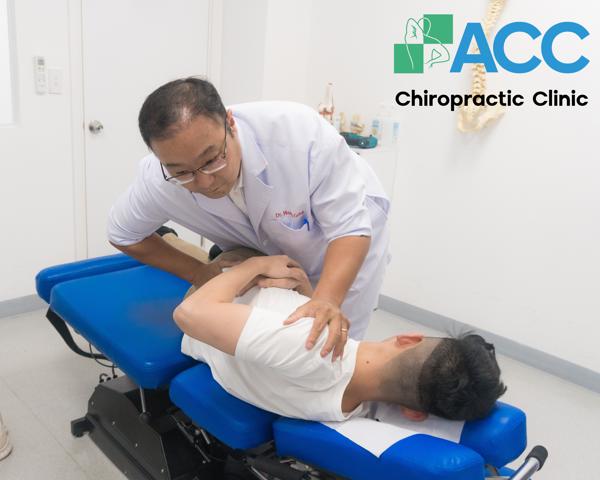
The principle of Chiropractic treatment is to perform adjustments on misaligned vertebrae—the root cause of many musculoskeletal disorders, including herniated discs. Based on this principle, ACC doctors manually adjust the discs and joints back to their proper positions, reducing intradiscal pressure and preserving the nerves passing through the vertebrae. As a result, symptoms improve, and patients no longer have to endure persistent, uncomfortable pain.
In addition, ACC combines Chiropractic with Pneumex Physical Therapy and Rehabilitation, utilizing supportive equipment such as the DTS Spinal Decompression System, ATM2 Active Therapeutic Movement, and Vertetrac and Cervico Decompression Devices. These technologies facilitate the healing of disc injuries and help patients quickly escape from pain. Furthermore, physical therapy specialists at ACC design strengthening exercises for weak muscle groups, helping patients maintain physical fitness tailored to their specific condition and injury level.
Many patients treated with this approach at ACC have experienced no recurring pain and have quickly returned to their normal lives. One notable case is Ms. Nguyen Thi Kim Ngân, 78, who suffered from persistent pain and significant difficulties in daily activities due to scoliosis and lumbar spinal degeneration. Despite taking numerous painkillers, her condition did not improve, and she even developed stomach issues as a result. She eventually sought examination and treatment at ACC Clinic.
Notably, in addition to treatment, ACC doctors provide nutritional counseling and guide patients on home exercise routines to maintain long-term results. Contact ACC today for proper treatment and effective pain relief for herniated discs with our team of highly experienced international experts.
The article above provides information on the most common medications used for treating herniated discs today. Please note that patients must undergo examination and follow treatment instructions from a doctor, avoiding the improper use of medication which can lead to dangerous complications
>> Read more: Lumbar disc herniation – The nightmare of many young people