





Contents
After giving birth, while overjoyed with the new journey of motherhood, many mothers feel anxious about the significant changes in their health and physique. Understanding this, ACC introduces gentle and simple home exercises for postpartum women, along with important training notes. Follow and practice these today to stay healthy and regain your shape!
1. Benefits of Regular Exercise for Postpartum Women
Maintaining an exercise routine after giving birth brings numerous benefits to new mothers, specifically:
- Restores and boosts energy levels: Helping moms stay strong enough to take better care of their babies.
- Stabilizes weight and tones muscles: Helping you regain your pre-pregnancy shape (when combined with a proper diet).
- Reduces stress and fatigue: Lowering the risk of postpartum depression.
- Improves sleep quality: Helps you fall asleep faster and achieve deeper rest.
- Alleviates aches and pains: Specifically in the back and abdominal muscle areas.
- Prevents Deep Vein Thrombosis (DVT): And other dangerous postpartum complications.
- Restores pelvic floor structure: Crucial for recovery after the strain of pregnancy.
- Prevents and treats common issues: Such as urinary/fecal incontinence, uterine prolapse, and vaginal laxity.
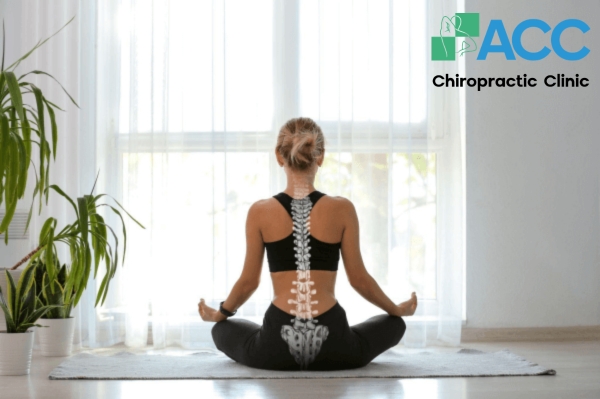
However, for these exercises to yield optimal results, women need to train at the right time and use the correct methods.
2. When can postpartum mothers start exercising?
The timing depends on the mode of delivery:
2.1. For natural delivery (Vaginal birth)
Mothers who deliver naturally can start Kegel exercises as early as the second day after birth, once their physical and mental health feels ready. For light sports such as swimming or walking, it is best to wait until the 7th week postpartum.
2.2. For C-section (Cesarean delivery)
Postpartum mothers who undergo a C-section can begin pelvic floor exercises from the 6th day post-surgery. For other low-intensity workouts, it is best to wait until 3 months after delivery, when health has fully stabilized.
3. Postpartum exercises for a quick recovery
Here are the most effective exercises to help mothers optimize their health and regain their shape:
3.1. Pelvic Floor Strengthening (Kegel Exercises)
Postpartum women should start Kegels as soon as possible, as they improve blood circulation and help resolve perineal bruising or issues with urinary incontinence. Additionally, Kegels help tone and tighten the vaginal structure that was stretched during childbirth. As these exercises can be tiring, you should divide them into several sessions throughout the day rather than overexerting yourself.
How to perform:
- Lie on your back with your knees bent and feet flat on the floor.
- Squeeze and contract the vaginal muscles, hold for 10 seconds, then relax. Note: Do not tighten your leg or abdominal muscles during this process.
- Repeat 10 times per set, 3–4 sets per session, and 3 sessions per day for the best results.
3.2. Gentle Walking
Gentle walking not only helps burn calories to slim down your body but also provides a sense of relaxation and ease, effectively reducing the risk of postpartum depression. You can perform this exercise alone or with your baby by taking them for a stroll in a stroller.
3.3. Shoulder Rolls
This exercise helps relieve tension in the upper back and improves shoulder joint mobility, which is especially beneficial for mothers who experience soreness from sitting in incorrect postures while caring for their babies.
How to perform:
- Lift your shoulders high and squeeze your shoulder blades together until you feel a stretch in your upper back and blades.
- Lower your shoulders and roll them forward.
- Repeat this movement 10 times.
3.4. Pelvic Twists
Another exercise that effectively helps reduce back and abdominal fat is the pelvic twist.
How to perform:
- Lie on your back with your feet flat on the floor and knees bent.
- Inhale and expand your abdomen.
- Exhale while tilting your tailbone toward your navel, keeping your hips on the floor.
- Squeeze your glutes, then release slowly.
- Repeat 8–10 times per session.
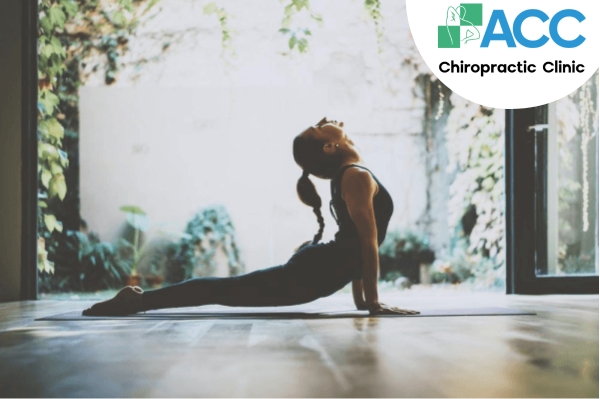
3.5. Cobra Pose
Although this pose doesn’t involve much movement, it targets the glutes and back muscles, helping to burn fat and tone these areas.
How to perform:
- Lie face down on the floor with your legs stretched out straight.
- Place your hands near your armpits, spreading your fingers wide.
- Inhale deeply, lifting your neck and head so that you feel your legs and spine stretching.
- Exhale and slowly lower your body back to the floor.
3.6. Forward Fold (Standing Forward Bend)
This movement is relatively easy to perform and is quite effective for weight loss, helping postpartum mothers achieve a beautiful waistline and strong abdominal muscles.
How to perform:
- Stand on a flat surface with your feet parallel and about 30cm apart. Reach your hands behind your back and interlock them.
- Keep your back straight while bending forward at the hips.
- Lift your arms high until you feel your spine stretching.
- Take a few deep breaths, then slowly return to a standing position.
- Repeat this 8–10 times per session.
3.7. Lower Abdominal Stretch
This exercise is particularly suitable for mothers who had a C-section, as it gently targets the lower muscle groups affected by surgery.
How to perform:
- Lie flat on the floor with your arms and legs extended.
- Engage your core and leg muscles, then bend one knee while keeping the other leg straight, breathing evenly.
- Gently engage the muscles to return your leg to the starting position.
- Repeat with the other leg.
3.8. Pelvic Tilts
During pregnancy, the lumbar-pelvic muscles endure constant heavy pressure, leading to lingering pain in the postpartum period. This exercise helps realign the lumbar spine and activates the deep core muscles more accurately.
How to perform:
- Lie on your back with your palms facing down, placed in the space between your lower back and the floor. Inhale deeply.
- As you exhale, look down toward your torso. Hold this position for 5–10 seconds.
- Repeat 10 times for the best results.
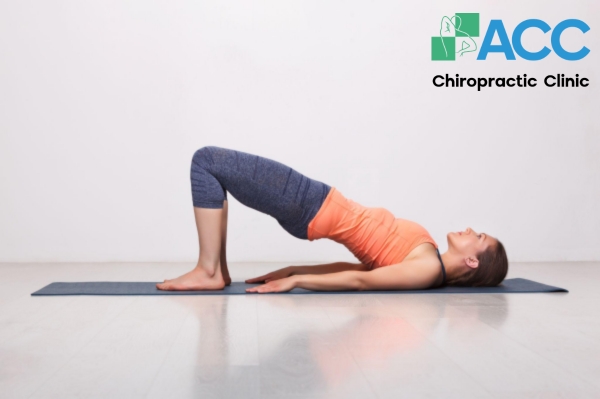
3.9. Bridge Pose
C-section mothers can regularly practice the Bridge pose because it does not put excessive pressure on the incision while helping to tone the abdominal muscles.
How to perform:
- Lie on your back on a flat surface with legs straight, arms out at hip-width, and palms facing down.
- Apply force and bend your knees, then gently lift your body so that only your shoulders and head touch the ground.
- Hold this position for 10 seconds, breathing steadily, then slowly lower yourself back to the starting position.
4. What should postpartum mothers keep in mind when exercising?
Here are several key points that women should remember while performing postpartum recovery exercises:
- Wear loose, breathable clothing: Ensure comfort and airflow.
- Choose a well-fitting bra: It should be neither too loose nor too tight, providing proper support to protect your breasts.
- Stay hydrated: Always have water available during your workout.
- Rest for at least 5 minutes after exercising: This allows your heart rate and breathing to stabilize.
- Breastfeeding tip: If you are nursing, it is recommended to breastfeed or express milk before exercising to avoid the discomfort of breast engorgement.
- Be patient and gradual: Do not overexert yourself; your body needs time to recover from the marathon of childbirth.
- Warm up thoroughly: Warming up is a vital step to activate muscles, prepare for movement, and prevent adverse side effects.
Furthermore, not all postpartum or post-C-section exercises are suitable for every mother. If you experience any of the following warning signs, stop exercising immediately and consult your doctor:
- Headaches, dizziness, or lightheadedness.
- Persistent rapid heartbeat (palpitations).
- Sharp chest pain.
- Swelling in the face, hands, or feet (edema).
- Persistent or severe back pain.
- Body aches that make walking difficult.
- Increased or heavy vaginal bleeding (lochia).
It is evident that if postpartum women do not prioritize proper healthcare, maintain a scientific lifestyle, and practice correct posture—especially while holding or breastfeeding their babies—they are highly susceptible to musculoskeletal issues and generalized body aches.
However, if your health does not permit you to perform postpartum recovery exercises to improve your joint health, consider other safe solutions—such as Chiropractic care combined with Physical Therapy and Rehabilitation at ACC Clinic.
ACC (a member of the FV Group) is proud to be a pioneer in the field of Chiropractic care, with over 16 years of experience, featuring a team of highly skilled foreign specialists. To date, the clinic has helped tens of thousands of patients escape musculoskeletal pain, including many postpartum women.
After a thorough examination, ACC doctors will personalize a Chiropractic treatment plan that best fits each patient’s condition. Using this method, doctors perform manual adjustments to realign misaligned skeletal structures, thereby releasing nerve compression and stimulating recovery in a short period. As a result, pain disappears without the need for medication or surgery. Furthermore, the clinic integrates Physical Therapy and Rehabilitation using modern medical equipment to significantly shorten recovery time.
In particular, throughout the treatment process, patients will be closely monitored by doctors and advised on appropriate lifestyle and nutrition during the postpartum period.
If you have any questions about postpartum exercises for women or about methods of caring for bone and joint health, please visit https://acc.en/ for further advice!